Peterborough
Website Maintenance
& Support Services
Keep your website stable, secure, and performing at its best with our ongoing website maintenance and support services, built around the needs of Peterborough organisations.

Keep Your Website Performing at Its Best with Expert Maintenance
Tell us where your site is letting you down, whether that's slow pages or broken forms, and we'll get things back under control. Maintenance sits inside our wider Peterborough Web design agency, so the team fixing the site understands how it was built in the first place.
Explore Key Sections of This Page
What Is Website Maintenance & Support?
Website maintenance is essential for safeguarding your online presence, improving user experience, and protecting both your SEO visibility and brand credibility.
People expect websites to load quickly, work properly on every device, and feel secure every time they visit. If your site falls short, they will not hang around and neither will Google.
When maintenance is neglected, small issues can snowball into security problems, broken pages, ranking drops, and avoidable downtime, which is why ongoing support should be a core part of your digital approach in Peterborough.
Key Reasons Why Website Maintenance Matters:
- Stronger Security
Regular updates, monitoring, and hardening help reduce the risk of malware, hacking attempts, and data loss. - Reliable Performance
Speed checks, clean-ups, and optimisation keep load times low and navigation smooth for visitors. - Search Visibility Protection
Keeping your site technically healthy supports crawlability, indexing, and long-term rankings. - Trust and Professionalism
A site that works flawlessly, stays current, and looks cared-for helps build confidence in your business. - Lower Long-Term Costs
Spotting issues early helps you avoid expensive emergency fixes and disruption to enquiries or sales.
With proactive maintenance, your website stays dependable, secure, and ready to support your Peterborough business goals as expectations and threats continue to change.
Why Website Maintenance Matters
Website maintenance is vital for protecting your digital presence, keeping your site running smoothly, and maintaining user confidence in a crowded online marketplace.
Visitors now expect secure browsing, fast load times, and content that clearly reflects what you offer right now, not what you offered two years ago. For Peterborough businesses, regular maintenance helps you stay credible, competitive, and easy to find.
When upkeep is ignored, the impact is rarely small. A missed update can trigger security vulnerabilities, broken functionality, search visibility loss, or outages that stop enquiries coming in, often costing far more than ongoing maintenance ever would.
Key Reasons Why Website Maintenance Matters:
- Improved Security
Consistent patching, monitoring, and best-practice hardening reduces the risk of malware, intrusion attempts, and data compromise. - Consistent Performance
Speed optimisation and routine checks help keep pages quick to load and journeys friction-free on mobile and desktop. - Technical SEO Stability
Maintaining crawlability, fixing errors, and keeping the site technically sound supports rankings and long-term traffic. - Trustworthy Brand Presence
A website that is current, functional, and well maintained signals professionalism and reliability to every visitor. - Better Cost Control
Preventative work catches issues early, reducing the likelihood of emergency fixes, lost leads, and unplanned downtime.
“Investing in maintenance means more than just keeping a website online. It supports security, speed, relevant content, and a smooth user journey - all of which directly impact business results.”
With regular, planned maintenance, your website stays resilient, competitive, and ready to support your Peterborough business as it grows.
Our Website Maintenance & Support Services
We deliver end-to-end website maintenance and support to keep your site secure, quick to use, and ready for what comes next.
Security Updates & Monitoring
We apply timely software updates, run routine malware checks, and monitor for suspicious activity to reduce risk and keep your website protected.
Content Management & Updates
From new service pages and team updates to images, offers, and blog posts, we keep your website current so it reflects your Peterborough business accurately.
Backups & Recovery Planning
We schedule reliable backups and put a clear recovery process in place, so your website can be restored quickly if anything goes wrong.
Performance Monitoring & Optimisation
We track speed, Core Web Vitals, and usability signals, then make practical improvements to keep pages responsive and frustration-free.
Bug Fixes & Technical Support
When issues crop up, we act fast, whether that is broken links, forms not sending, layout problems, or deeper technical faults across browsers and devices.
SEO Health Maintenance
We monitor indexing and site health, update meta data where needed, and resolve crawl errors so your website stays easy to find in search.
Mobile Responsiveness Checks
We regularly test across popular screen sizes and devices, refining layouts and interactions to keep mobile journeys smooth.
Analytics Reporting & Insights
Clear monthly reporting covers key performance trends and user behaviour, alongside a focused list of recommended improvements.
With proactive maintenance in place, you can concentrate on running your business while we keep your website dependable day to day.
Our work
A selection of some of the websites we have designed, programmed, maintain or currently host:


























The Website Maintenance Process
Our structured website maintenance process keeps your site stable, protected, and performing consistently, with clear priorities and measurable progress.
1. Baseline Review & Site Audit
We start with a full health check to understand how your website is currently performing, flagging security risks, technical faults, and quick-win improvements.
2. Critical Fixes & Update Control
We prioritise the most important updates first, including your CMS, extensions, and security components, so the biggest risks are addressed without delay.
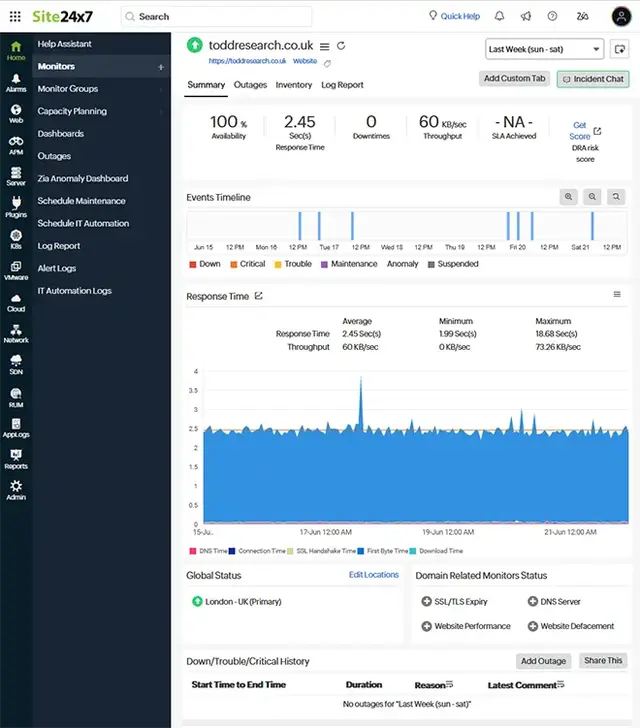
3. Proactive Monitoring
We set up ongoing monitoring to spot downtime, speed issues, and unusual activity early, allowing us to respond before problems affect customers in Peterborough and beyond.
4. Scheduled Monthly Maintenance
Each month we review backups, broken links, form functionality, SEO health signals, and key user journeys, making targeted adjustments to keep everything working as expected.
5. Continuous Improvement & Reporting
You receive a straightforward monthly update covering what we have done, what we have found, and what we recommend next, with an action plan focused on performance, resilience, and results.
This approach gives you transparency, accountability, and a website that stays dependable as your business needs change.
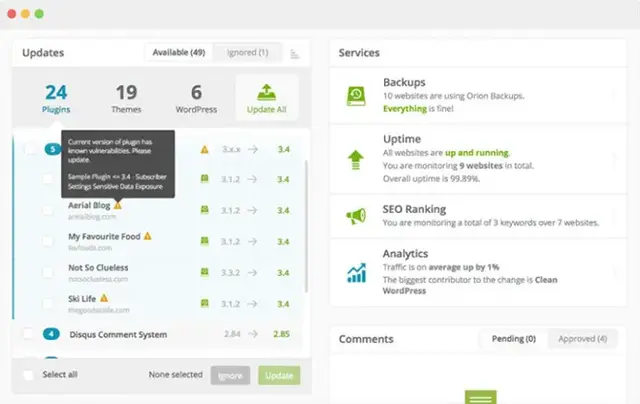
Recent Results
Our website maintenance and support services keep your site quick, secure, and fully operational, so your business does not lose enquiries, bookings, or sales due to avoidable technical problems.
Client: Private Clinic – Peterborough
Problem: Slow pages and intermittent outages caused missed appointment enquiries.
Solution: Priority security patching, caching and image optimisation, uptime alerts with rapid response.
Result: 99.99% uptime, load times reduced by 43%, online appointment requests up 35%.
Client: Ecommerce Brand – Peterborough Area
Problem: Checkout instability and crashes during campaign launches.
Solution: Hosting tuning, database clean-up, proactive monitoring, and stress-tested release process.
Result: No downtime during peak periods, 58% uplift in promotional revenue, fewer abandoned baskets.
Client: B2B Consultancy – Peterborough
Problem: Ageing extensions introduced security risks and site errors after updates.
Solution: Controlled update schedule, vulnerability checks, firewall rules, and staging-led deployments.
Result: Zero security incidents over 12 months, improved stability, stronger trust from prospects.
From security patching and speed improvements to monitoring and emergency support, our Peterborough-focused maintenance service prevents issues before they affect your customers. We keep your website stable, secure, and performance-ready, so you can focus on growing the business rather than reacting to problems.
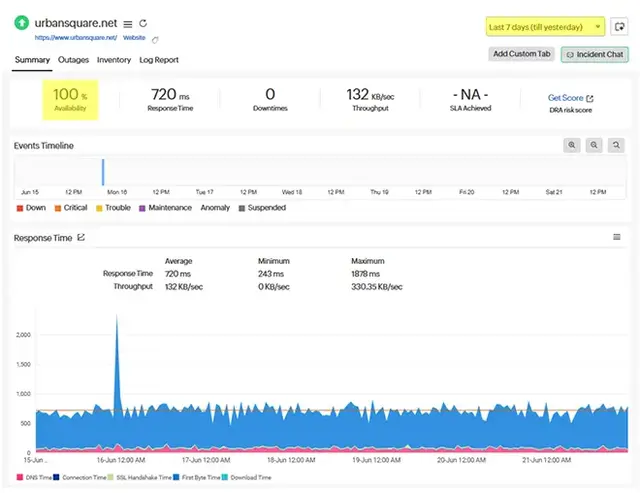
Tools & Technology We Use for Peterborough Website Maintenance
We use a proven set of trusted tools to deliver proactive, dependable website maintenance that keeps your site secure, healthy, and running smoothly.
Our toolkit typically includes:
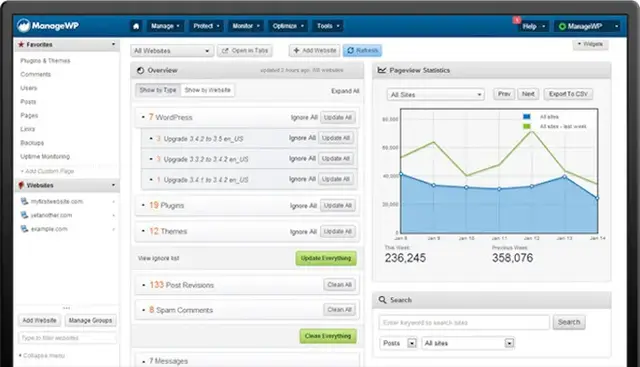
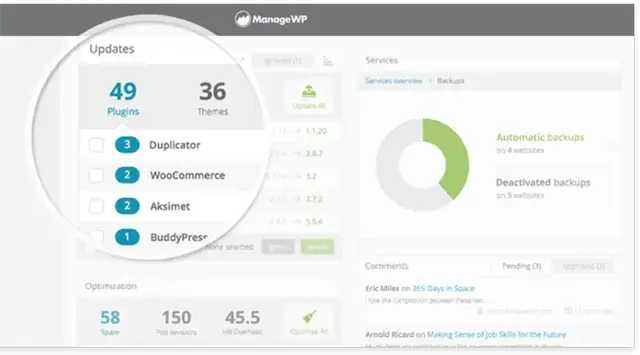
- ManageWP & MainWP
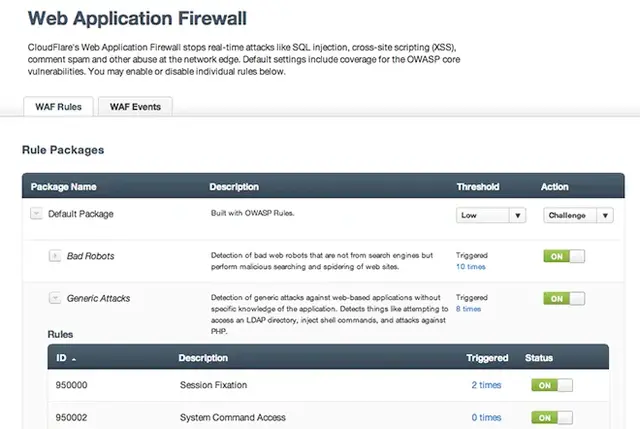
Centralised site management for streamlined updates, maintenance routines, and monitoring across multiple properties. - Sucuri, Wordfence & Cloudflare WAF
Security layers that support threat detection, firewall protection, and malware prevention, alongside ongoing monitoring. - Google PageSpeed Insights & GTmetrix
Performance testing to identify load-time bottlenecks and guide improvements aligned with Core Web Vitals. - VaultPress & UpdraftPlus
Backup solutions that support scheduled snapshots, redundant storage, and quicker recovery if a rollback is needed. - Google Analytics 4, Semrush & Ahrefs
Platforms for tracking user behaviour and visibility trends, while surfacing technical and content opportunities. - Google Search Console & Screaming Frog SEO Spider
Tools for spotting crawl and indexing issues, mapping site structure, and maintaining technical SEO hygiene.
Paired with hands-on expertise, these tools help us keep your website stable, protected, and performing at a level that supports your Peterborough growth goals.
Industries We Support
A high-performing website does not end at launch - it needs ongoing care to remain secure, fast, and dependable. Our website maintenance and support service keeps your Peterborough business online and running smoothly, with proactive updates, routine technical checks, and responsive help when you need it.
Whether you manage an ecommerce store, a service-led site, or a platform with more complex functionality, we provide the behind-the-scenes cover that helps prevent issues, maintain compliance, and protect performance over time.
From security patching and uptime monitoring to content changes and technical troubleshooting, we work alongside your team to reduce disruption, improve the user journey, and give you confidence that your website is being properly looked after.
-
Automotive
-
Environmental & Sustainability
-
B2B Service Providers
-
Franchise Businesses
-
Construction & Skilled Trades
-
Education & Training
-
App & Software Developers
-
Travel, Tourism & Attractions
-
Entertainment & Media
-
Professional Services
-
Food & Beverage
-
Beauty & Cosmetics
Local Website Maintenance Services in Peterborough
We support Peterborough organisations with responsive, locally focused website maintenance that keeps your site running smoothly and your team supported.
- Quicker Turnarounds: Prompt support aligned with UK working hours and the day-to-day pace of Peterborough businesses.
- Service That Fits Your Priorities: Clear communication and maintenance plans shaped around your website, your team, and your goals.
- Local Search Understanding: Technical upkeep that protects local visibility and helps your key pages stay competitive in Peterborough searches.
By combining local awareness with proven processes, we help your website perform strongly for customers in Peterborough and beyond.

Benefits of Professional Website Maintenance
Proactive website maintenance protects your investment, improves customer experience, and supports long-term digital performance. When your website is properly maintained, you gain clear, measurable benefits:
- Less Downtime
Preventative checks and quick fixes reduce outages, keeping your site available when customers are ready to enquire, book, or buy. - Smoother User Experience
Regular updates, performance tuning, and functional testing help pages load quickly and journeys remain frustration-free. - Stronger Security
Ongoing patching, vulnerability checks, and threat monitoring help protect your business from avoidable security incidents. - Lower Long-Term Costs
Identifying issues early helps you avoid urgent, expensive repairs and the knock-on cost of lost leads or sales. - More Conversions
A fast, secure, reliable website builds trust and makes it easier for visitors to take action, improving enquiries and revenue.
With professional maintenance in place, your website becomes a dependable, continuously improved asset that supports real business outcomes over the long term.

Why Choose Doublespark for Website Maintenance?
When you partner with Doublespark, you get a team that combines technical know-how, proactive support, and genuine Peterborough understanding to keep your website performing at its best:
- Two Decades of Regional Experience
Trusted website maintenance and support for organisations across Peterborough, backed by long-term experience and practical insight. - Complete Ongoing Coverage
From technical SEO checks and security hardening to speed improvements and content updates, we keep the essentials under control. - Proactive Monitoring
Continuous health checks and alerting help us spot issues early and resolve them before they disrupt enquiries, bookings, or sales. - Support Plans Built Around Your Site
Scalable maintenance packages shaped to fit your website’s complexity, priorities, and growth plans.
“Since working with Doublespark, our website has stayed stable and secure, and we have seen a real improvement in speed and reliability.” - Peterborough-based Client
Choose a maintenance partner that takes ownership of your website’s health and enjoy peace of mind knowing your digital presence is being properly looked after.

What Our Clients Are Saying
5-Star Google Reviews That Reflect Our Commitment to Excellence
-
2 months ago
I got Gary at DoubleSpark to overhaul my website as it wasn't performing very well. It has now been transformed and performing really well. We have been getting lots of leads from it. DoubleSpark have done a brilliant job. Thank you.
-
3 months ago
I had a great experience with Doublespark Internet Marketing. The team is knowledgeable, professional, and genuinely focused on delivering results. They took the time to understand my business needs and provided clear, effective strategies that made a noticeable difference.
-
5 months ago
I have been with Doublespark since 2012. As a Cambridge SEO company they supported the online shop and the online marketing, helping more clients find and book our services. Gary has always been willing to help with any issues on the website and has been quick to respond when I have asked for any updates or changes to be made to the website. Highly Recommended
-
8 months ago
Great company to work with, on hand with tech queries and very proactive when an very rare issue arises.
-
10 months ago
Doublespark have looked after website maintenance and hosting for osteolabs since 2021. They keep the site running smoothly, deal with updates behind the scenes, and respond quickly whenever we need support.


Website Design News, Trends and Insights Shaping Digital Experience

The Figma Web Design Process
Figma brings clarity to the parts of a website project that often cause friction. Instead of static PDFs and scattered emails, everyone works in a shared space with live designs, pinned comments, and clickable journeys.

How AI Is Redefining Web Design
AI has moved from being a back‑office helper to becoming part of the user experience itself. This long‑form guide explains how AI is influencing website design and development today, with practical examples.
FAQs About Our Peterborough Website Maintenance Services
What Does Ongoing Website Maintenance Cover For Peterborough Businesses?
Website maintenance is the ongoing work that keeps a site safe, stable, and useful long after it has gone live. In practice, it is a blend of security, performance, content care, and routine checks that stop small issues turning into expensive disruptions. For many organisations in Peterborough, the website is where new enquiries start, bookings are made, and trust is built - so reliability is not a nice-to-have, it is part of day-to-day operations.
A good maintenance routine begins with understanding what your site is built on. A brochure site on a CMS has different risks to an ecommerce store, a bookings platform, or a website with third-party integrations such as CRMs, payment gateways, chat tools, or quote calculators. Maintenance is about keeping every moving part aligned, patched, and monitored so visitors get a consistent experience on mobile and desktop.
Core Tasks You Should Expect
- Security Updates: Applying updates to the CMS core, themes, plugins, and server components so known vulnerabilities are closed quickly.
- Performance Optimisation: Reviewing speed bottlenecks, trimming unnecessary scripts, tuning caching, and keeping the hosting environment healthy and responsive.
- Content Updates: Refreshing copy, images, service details, team profiles, and compliance pages so the site stays accurate and persuasive.
- Backup Management: Running scheduled backups, checking they complete correctly, and testing that restores work so you are not guessing in an emergency.
- Bug Fixes And Troubleshooting: Finding and resolving issues such as broken layouts, failed forms, plugin conflicts, tracking problems, and browser quirks.
Beyond the headline items, there are plenty of smaller tasks that matter. Broken links creep in when pages are moved. Contact forms can stop sending if an email provider changes its rules. Tracking can drift if cookie consent settings are adjusted. Even simple design changes can introduce accessibility issues if they are not checked properly. Maintenance is the discipline of catching these things early.
It also includes quality assurance on critical user journeys. If you rely on calls, bookings, quote requests, or online payments, those steps need to be tested regularly. The goal is not just to keep the site online, but to keep it working as a conversion tool - especially when your competitors in and around Peterborough are only a click away.
Housekeeping That Keeps Things Predictable
Good maintenance is also preventative housekeeping. That can mean cleaning up old revisions and database tables, removing unused plugins, checking storage limits, and making sure caching and compression are still configured correctly. It is less glamorous than a redesign, but it is the work that prevents sudden slowdowns and unexpected errors.
Maintenance should also be tied to your marketing calendar. If you are launching a new service, running a seasonal campaign, or updating landing pages for a local event, you want changes to go live safely and quickly. A maintenance process helps you make updates with confidence, without introducing broken pages or a dip in performance.
Finally, maintenance is about documentation and control. Changes should be logged, updates should be applied in a sensible order, and the site should not be treated like a black box. When work is structured, you reduce the risk of surprises and you can plan improvements rather than reacting to problems.
A well maintained website protects your reputation, keeps key journeys working, and ensures your site continues to support growth across Peterborough and beyond.
How Does Website Maintenance Help You Keep Strong SEO Visibility?
Website maintenance and SEO are closely linked because search performance depends on technical health, speed, and a reliable user experience. You can publish great content and still struggle to rank if the site is slow, error-prone, or difficult for search engines to crawl. Regular maintenance protects the foundations that your SEO strategy sits on, helping organisations in Peterborough stay visible when potential customers search for local services.
Search engines reward websites that are easy to access and pleasant to use. That includes stable hosting, fast load times, secure connections, and pages that return the correct status codes. Maintenance work keeps these areas in check and stops gradual decline. It is common for sites to accumulate issues over time - unused plugins, bloated scripts, broken internal links, and outdated templates can quietly drag down performance and create crawl waste.
Maintenance Areas That Directly Support SEO
- Speed Improvements: Ongoing optimisation helps keep Core Web Vitals and perceived performance in a healthy range, reducing bounce rates and improving engagement.
- Security Enhancements: Maintaining HTTPS and preventing malware warnings protects trust signals and avoids the visibility loss that often follows a compromised site.
- Content Freshness: Updating pages, adding new material, and improving existing copy signals that the site remains current and useful.
- Technical Error Fixes: Repairing broken links, redirect chains, duplicate pages, and crawl errors helps search engines index the right URLs efficiently.
Technical SEO benefits from routine attention. A change to a plugin or a theme can accidentally add noindex tags, generate thin parameter URLs, or block important assets. Maintenance checks catch these problems quickly. It also keeps structured data, XML sitemaps, and canonical tags consistent, which reduces confusion for search engines and supports better ranking stability.
Maintenance is also where you protect your site against slow creep. A site that was fast at launch can become sluggish as images are added without optimisation, scripts are installed for new features, and the database grows. Even if your rankings hold for a while, users will feel the friction and conversion rates often drop first. Regular performance reviews prevent that gradual erosion.
For local SEO, accuracy matters. If your opening hours, contact details, service areas, or core offers change, the website needs to reflect that. Maintenance helps keep key pages consistent, ensures internal linking still supports priority services, and reduces the chance of conflicting information across the site.
Why Search Engines Notice Maintenance
Search engines effectively see the outcomes of maintenance. Pages that load quickly and remain free of errors are easier to crawl and more likely to satisfy users. A clean redirect strategy helps avoid duplicate content. Fixing 404s prevents link equity being wasted. Removing outdated pages, or improving thin content, can reduce overall site noise so your strongest pages perform better.
In short, maintenance is the routine that keeps SEO gains from leaking away. It reduces risk, keeps the site healthy, and ensures the work you put into content and links is not undermined by technical debt.
Consistent maintenance protects search visibility by keeping your website fast, secure, crawlable, and aligned with what users in Peterborough are looking for.
How Often Should You Schedule Website Maintenance For A Peterborough Website?
There is no single perfect maintenance schedule because every website has a different level of risk and complexity. A simple service site with a handful of pages will not need the same cadence as an ecommerce store processing payments, a membership platform, or a site that changes content weekly. What matters is consistency - regular checks that match how critical the website is to revenue and how frequently its underlying software changes.
For most Peterborough organisations, a layered approach works best. Some tasks should happen little and often, because they reduce security risk and catch failures early. Other tasks are better grouped into monthly and quarterly routines, where you can review trends, plan improvements, and tidy up the technical details that accumulate over time.
A Practical Maintenance Rhythm
- Weekly: Apply priority security updates, review error logs, test key forms, and check for obvious issues such as broken layouts or failed tracking.
- Monthly: Run full backups and verify restores, review performance metrics, check Search Console for indexing or coverage warnings, and update content that is time sensitive.
- Quarterly: Complete a deeper technical audit covering redirects, duplicate content, internal linking, Core Web Vitals trends, accessibility checks, and improvements to user journeys.
If your site has high traffic, frequent promotions, or critical integrations, you may need daily monitoring and more frequent updates. Ecommerce sites benefit from close attention around peak trading periods because checkout issues, shipping integration failures, or payment gateway changes can have an immediate impact on revenue. Booking sites also need regular testing because a single form failure can silently stop lead flow.
Another factor is how often you make changes. If multiple people publish content, upload images, or install new features, maintenance becomes a safety net. It ensures changes do not introduce broken links, slow pages, or inconsistent templates. Even on hosted platforms, where core updates are handled for you, you still need ongoing checks for integrations, tracking, and content accuracy.
It is also wise to schedule maintenance after any significant change, such as a new theme, a redesigned template, a major plugin install, or a migration to a different host. These moments are when hidden issues appear, from caching conflicts to missing redirects. A quick post-change review can prevent long-term problems.
Seasonal businesses in the Peterborough area can benefit from a plan that increases frequency ahead of key trading months. That might mean reviewing speed and server capacity before a campaign launch, checking landing pages and forms before a new service push, or auditing technical SEO before a planned content sprint.
Most importantly, maintenance should be documented and repeatable. A checklist that is followed every week and month is far more effective than occasional ad-hoc fixes. When the routine is predictable, you reduce risk and you can spot patterns early, such as a recurring plugin conflict or a gradual decline in page speed.
Regular maintenance, carried out on a clear schedule, keeps your website stable and reduces the chance of unexpected downtime or expensive emergency repairs.
What Are The Real Consequences Of Not Maintaining Your Website?
When a website is left without regular maintenance, problems rarely arrive as one dramatic failure. More often, the site slowly becomes less secure, less reliable, and less effective at turning visitors into customers. For businesses in Peterborough, that can mean missed enquiries, lost bookings, and a weaker reputation - all caused by issues that could have been avoided with routine care.
Unmaintained websites are exposed because software ages quickly. Plugins, themes, and server components receive updates for a reason: vulnerabilities are discovered, browsers change, and performance expectations increase. When updates are skipped, you create an expanding gap between your site and current best practice. That gap is exactly where attackers and technical failures tend to appear.
Common Outcomes Of Neglect
- Security Vulnerabilities: Outdated components can be exploited, leading to malware injections, spam pages, defaced content, or data loss.
- Performance Degradation: Pages become heavier, databases bloat, and hosting issues go unnoticed, resulting in slower load times and higher abandonment.
- SEO Decline: Broken links, crawl errors, duplicate pages, and weak performance signals can reduce rankings and organic traffic.
- Reputation Damage: Visitors lose confidence if the site looks dated, behaves unpredictably, or triggers browser security warnings.
Even seemingly minor issues can have a big impact. A contact form that stops sending might go unnoticed for weeks. A tracking tag that breaks means you lose insight and cannot measure campaign performance properly. An expired SSL certificate can lead to security warnings that scare visitors away. Each problem chips away at trust and conversion rates.
Neglect also increases the cost of future work. When maintenance is skipped for months or years, updates become riskier because compatibility gaps grow. Fixes that would have taken minutes become multi-hour investigations. In the worst cases, the only safe route is a rebuild, because the software stack is too far behind to update reliably.
There are compliance and operational risks too. Cookie consent settings can drift, privacy pages can become inaccurate, and accessibility issues can creep in as templates are changed over time. Even if you do not handle payments, your website still represents your organisation and can be a point of failure if it stops working at the wrong moment.
There is also a business continuity angle. If your website supports enquiries outside office hours, downtime is not limited to working time. A site outage on a weekend can mean losing leads to competitors. For ecommerce, a short outage can have a direct revenue impact, and a security incident can involve reputational harm that lasts far longer than the technical fix.
Maintenance is not about perfection, it is about resilience. The goal is to keep your site in a state where problems are less likely and recovery is straightforward. That is exactly what neglect removes: the ability to respond quickly and confidently when something goes wrong. It is rarely worth the risk.
Ongoing maintenance prevents avoidable failures, protects your brand, and keeps your website working as a dependable asset for your Peterborough business.
Do Only WordPress Sites Need Maintenance, Or Does Every Platform Require It?
WordPress websites do need routine care because they rely on regular updates to the core system, themes, and plugins. However, maintenance is not a WordPress-only requirement. Every website, regardless of platform, benefits from ongoing attention because the wider ecosystem changes constantly. Security threats evolve, browsers update, search engines shift expectations, and third-party integrations change their rules. If your website matters to your business in Peterborough, it needs maintenance that keeps it secure, predictable, and aligned with customer expectations.
The difference between platforms is not whether maintenance is needed, but where the responsibility sits. Some hosted platforms handle part of the workload for you, such as applying core updates or managing server patches. That can reduce technical risk, but it does not remove the need for monitoring, testing, and content care. Websites still break because integrations fail, scripts clash, and changes to page templates can introduce issues.
How Maintenance Varies By Website Type
- WordPress: Requires regular core updates, plugin and theme management, database housekeeping, and compatibility testing to avoid conflicts.
- Custom Built Sites: Need framework and dependency updates, server and environment management, code reviews, and security patching aligned to the stack used.
- Hosted Builders: Platforms may handle infrastructure updates, but you still need to maintain content quality, SEO settings, tracking, and third-party add-ons.
- Headless And API Driven Sites: Require monitoring across services, token and permission reviews, dependency updates, and checks that APIs and webhooks continue to run reliably.
Ecommerce adds another layer. Whether you run on a hosted solution or a bespoke build, you must keep payment flows, checkout logic, and security controls under review. Small issues can have an immediate commercial impact, and compliance expectations are higher. Maintenance is also where you test that emails, receipts, shipping rules, and stock integrations still behave correctly after updates.
What Still Needs Doing On Managed Platforms
Even if your platform manages updates behind the scenes, the website still needs active care. Content can become outdated, integrations can silently fail, and tracking can drift if cookie consent settings change. Performance can also decline if images are uploaded at the wrong size, third-party scripts accumulate, or template changes introduce layout issues on mobile devices.
Maintenance is where you keep technical SEO tidy too. Redirects are needed when pages move, internal links need checking after content changes, and indexing problems can appear if the platform generates duplicate URLs. Without routine checks, these issues build up and reduce visibility, even though the platform itself is technically up to date.
Finally, organisations often run more than one system. You might have a main site plus landing pages, a recruitment microsite, or a client portal. A maintenance partner can keep consistency across this landscape, ensuring security posture, tracking, and performance standards remain aligned. That is particularly useful when websites grow organically over time and ownership of different sections becomes unclear.
No matter what your website is built on, regular maintenance keeps it secure, reliable, and competitive for users searching in Peterborough and beyond.
How Does Regular Website Maintenance Make Your Site More Secure?
Security is one of the most important reasons to maintain a website. Attacks are not limited to large organisations - automated bots scan the web constantly, looking for known weaknesses in outdated software. If your website supports enquiries, handles customer details, or represents your brand in Peterborough, it needs protection that is kept current rather than left to chance.
Website security is not a single tool or setting. It is a process made up of prevention, detection, and recovery. Maintenance ties those three together. It reduces the likelihood of compromise, increases the chance of spotting threats early, and ensures you can restore quickly if the worst happens.
Security Activities Within Ongoing Maintenance
- Software Updates: Patching the CMS, plugins, themes, and server software so vulnerabilities are closed before they are exploited.
- Firewall And Malware Monitoring: Using firewall rules and scanning to detect suspicious behaviour and block common attack patterns.
- Regular Backups: Keeping recent backups and verifying restore processes so you can recover without panic if files are altered or deleted.
- SSL Management: Maintaining HTTPS encryption and renewing certificates so visitors never see browser warnings and data stays protected in transit.
Hardening Steps That Reduce Risk Further
Maintenance is also where you apply practical hardening that makes a website harder to attack. That includes limiting admin access, enforcing strong passwords, and using multi-factor authentication where possible. It can also involve tightening file permissions, disabling unnecessary features, and ensuring security headers are configured sensibly.
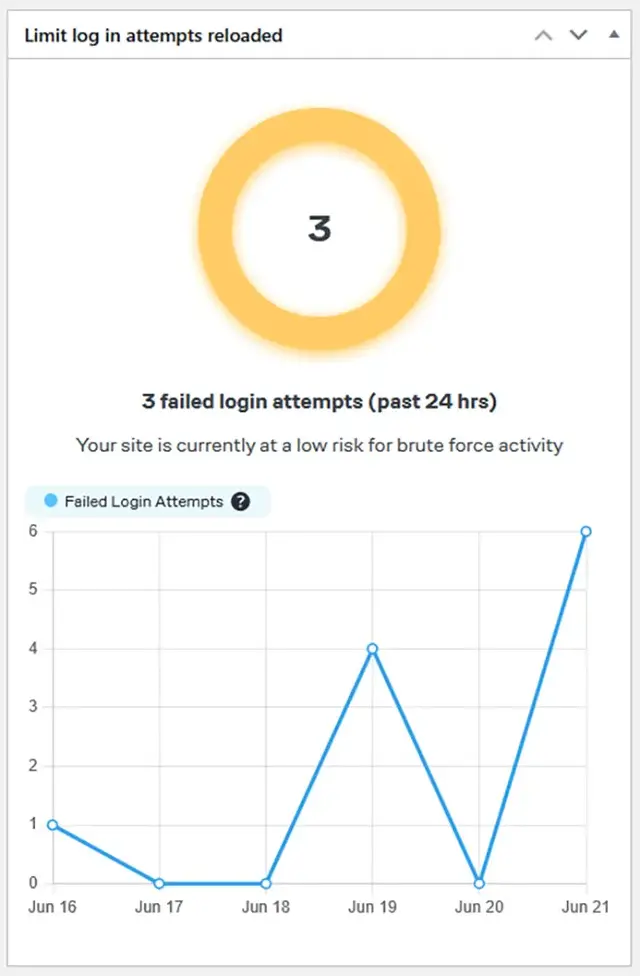
Spam and abuse protection sits here too. Forms and login pages are frequent targets, so rate limiting, bot protection, and sensible validation help prevent nuisance traffic turning into a real incident. On sites that send email, maintenance should also include checks that outgoing mail remains properly configured, because compromised sites are often used to send spam.
Another part of maintenance is staying ahead of the basics that attackers rely on: outdated accounts, exposed admin URLs, and weak access controls. Regular reviews of user accounts, plugins, and third-party scripts reduce the attack surface and make the site simpler to protect. Where appropriate, maintenance can also include vulnerability scanning and checks for known compromised credentials.
Security maintenance is not only about stopping attacks. It is also about reducing the impact if something does slip through. Keeping backups offsite, protecting them with the right permissions, and storing recovery details safely means you can restore quickly without making rushed decisions.
Security is about visibility as well as prevention. Monitoring for uptime, file changes, and spikes in traffic helps spot problems early. For example, a sudden increase in 404 errors may indicate automated probing. Unexpected new pages in the index can be a sign of injected spam. Regular checks across Search Console and server logs can catch this before it causes long-lasting damage.
Finally, recovery planning matters. If a site is compromised, you need a clear sequence: isolate the issue, clean infected files, restore from a known-good backup, change credentials, and tighten controls so the problem does not return. A maintenance programme keeps these steps rehearsed and reduces downtime and stress during an incident.
Routine maintenance is your strongest first line of defence, keeping protections up to date and reducing the chance that your website becomes an easy target.
What Should A Good Website Maintenance Package Include?
A website maintenance package should feel less like a list of tasks and more like a safety net that keeps your site healthy. The best plans combine routine care with proactive monitoring and clear reporting, so you know what is happening and why it matters. For Peterborough organisations, this is often the difference between a website that quietly supports growth and one that becomes a source of interruptions and uncertainty.
Packages vary because websites vary. A small brochure site may mainly need updates, backups, and basic monitoring. A site with ecommerce, bookings, or marketing integrations will need more regular testing and a faster response standard. The key is that the package matches business risk, not just technical preferences.
Common Inclusions In A Strong Plan
- Security Monitoring And Patching
- Content Updates And Edits
- Performance And Speed Optimisation
- Technical SEO Checks And Fixes
- Backup Scheduling And Restoration Services
- Uptime Monitoring And Priority Support
Those inclusions should be delivered through a clear process. That usually starts with an initial audit to identify vulnerabilities, outdated components, and performance bottlenecks. From there, updates are applied in a controlled way, monitoring is configured, and a routine is established for monthly health checks.
A strong package also includes user journey testing. It is not enough to confirm that pages load. Forms, booking steps, checkout journeys, and key calls to action should be tested regularly, because these are the parts that directly affect leads and sales.
Change control is another essential element. Updates should not be applied blindly, especially on complex sites. A good package includes compatibility checks and a safe way to roll back if something breaks. Many serious issues come from plugin conflicts, caching misconfigurations, or small template changes that affect important pages.
It should also be clear how support is delivered. That might include a defined contact route, realistic response expectations, and a simple way to request routine changes without unnecessary back-and-forth. For some websites, a set monthly allowance for content edits or small tweaks is useful, because it keeps the site up to date without turning every update into a separate project.
Access management is another detail that good packages handle well. Credentials should be stored safely, admin access should be limited, and there should be a record of who has access to hosting, domains, analytics, and key third-party tools. These details directly affect how quickly issues can be resolved.
How Reporting Should Work
Reporting should be meaningful rather than noisy. The best reporting highlights what changed, what risks were avoided, and what needs attention next. That may include uptime, speed trends, security alerts, key SEO health indicators, and confirmation that conversion tracking is still recording events correctly.
Finally, the right package should be scalable. As your website grows, you may add new landing pages, integrate a booking system, or expand content publishing. Your maintenance plan should be able to adapt, with agreed response times and a clear scope for ongoing tasks versus planned improvements.
A well designed maintenance package gives you confidence that your website is being looked after properly, with visibility, accountability, and predictable outcomes.
How Much Should Website Maintenance Cost In Peterborough?
Website maintenance costs are best understood as an ongoing investment in stability, security, and performance rather than a simple monthly fee. Two websites can look similar on the surface and have very different support needs underneath. The right cost level depends on how the site is built, how critical it is to revenue, and how quickly issues need to be resolved.
For a small, low-change site, maintenance may focus on updates, backups, and periodic health checks. For a high-traffic website or anything handling payments, bookings, or sensitive data, the scope expands quickly. You are paying for monitoring, faster response, deeper testing, and the expertise to avoid problems that can cause revenue loss or reputational harm.
Factors That Influence Maintenance Pricing
- Website Size: Larger sites have more templates, more content, and more links to monitor, which increases the time needed for checks and fixes.
- Functionality: Ecommerce, booking systems, membership areas, and custom integrations add risk and require more frequent testing.
- Service Scope: Plans that include content updates, technical SEO, performance optimisation, and priority support will cost more than basic monitoring.
The current condition of the site is also important. If the website has not been updated for a long time, there may be an initial stabilisation phase where compatibility issues are resolved, plugins are replaced, and processes are put in place. Once the site is under control, ongoing costs are usually more predictable and the risk of disruptive surprises falls sharply.
Response expectations affect cost as well. Some businesses are comfortable with fixes within one or two working days for non-critical issues. Others need rapid response because a failed checkout or broken booking form has an immediate impact. Faster response requires dedicated capacity, structured monitoring, and robust backup processes, which are reflected in pricing.
It is also worth checking what is included in the fee. Some providers quote low monthly prices but treat basic tasks as add-ons, such as restoring a backup, applying urgent updates, or fixing a broken form. A clear scope and transparent reporting usually indicates a more reliable service.
The safest way to judge cost is to compare like with like. A plan that includes monitoring, tested backups, and structured reporting is not the same as a plan that simply applies updates when convenient. If your website is central to enquiries or bookings, a cheaper plan that reacts slowly can be a false economy.
Many Peterborough businesses find that the best long-term approach is a consistent monthly retainer that covers core maintenance, with larger improvements scoped separately. That keeps routine protection predictable while still allowing for planned development when you want to enhance the site.
Compare maintenance costs to the impact of a single incident. A security clean-up, emergency restore, or extended downtime can easily exceed many months of proactive support. Maintenance also protects marketing investment: if you are spending on SEO, PPC, or content, a broken or slow site wastes that spend quickly.
The best value maintenance plan is the one that matches your business risk, keeps the site healthy, and prevents costly surprises before they happen.
Can You Maintain Your Website Yourself, Or Is Professional Support A Better Fit?
Many business owners can handle basic website tasks, such as updating text, uploading images, or publishing a blog post. Modern platforms make that straightforward. The challenge is that effective maintenance goes beyond content edits. It involves security patching, compatibility checks, performance tuning, monitoring, backups, and troubleshooting. If you do not have technical experience, it is easy to miss early warning signs or introduce problems while trying to fix something quickly.
DIY maintenance can work in limited circumstances, especially for a small, low-risk site that rarely changes. Even then, you need a routine: checking for updates, confirming backups, testing forms, and watching for security alerts. The reality is that these tasks are easy to postpone when you are busy running a business in Peterborough, and that is when risk builds up.
Risks And Limitations Of DIY Maintenance
- Missed Security Vulnerabilities: Updates are delayed, weak passwords remain in place, and basic hardening steps are overlooked until a problem appears.
- Technical Errors: An update can break layouts, cause plugin conflicts, or disrupt tracking, and diagnosing the root cause can take time.
- Time And Focus Drain: Maintenance becomes a background job that steals attention from sales, service delivery, and operations.
Professional support offers two big advantages: process and experience. A maintenance team follows checklists, uses monitoring, and applies updates with the right precautions. They are also familiar with common failure patterns, such as email deliverability changes, caching misconfigurations, and database issues that slow a site down over time.
If you prefer to keep maintenance in-house, it helps to set minimum standards. That includes taking automated backups, storing recovery credentials safely, keeping a record of changes, and testing key journeys regularly. It also means scheduling time to review security alerts and Search Console messages so warnings are not missed.
Another benefit of outsourcing is speed of recovery. If something breaks, having someone who can restore from a clean backup, identify a vulnerable component, and harden the site quickly reduces disruption. Without that support, you may lose hours searching forums and trying fixes that make the issue worse.
A common problem with DIY maintenance is that it is done reactively. Something breaks, then updates are applied quickly in production, which increases the chance of a bigger outage. Professional support typically introduces staging checks, controlled update windows, and monitoring that reduces the number of surprises.
If you are unsure, a good middle ground is to outsource the technical side and keep content updates in-house. You stay agile with day-to-day edits, while specialists handle the work that most often causes downtime and security risk.
Outsourcing does not mean losing control. A strong arrangement is often shared: you manage day-to-day content, while specialists handle the technical work, monitoring, and fixes. That keeps the site stable without slowing down your ability to publish and respond to customers.
Outsourcing maintenance turns a potential liability into a managed system, keeping your website reliable, secure, and ready to support your Peterborough business.
How Quickly Can Website Problems Be Fixed With A Maintenance Partner?
Issue resolution time depends on two things: how serious the problem is and what level of support you have in place. A site that is fully monitored, regularly updated, and backed up is far easier to fix than a site that has not been touched in months. The best maintenance services combine proactive monitoring with clear response standards, so problems are detected early and handled in a structured way.
Most issues can be triaged quickly. The first step is identifying impact: is the site down, are forms failing, is checkout broken, or is it a cosmetic issue on a low-traffic page? Once impact is clear, the response can be prioritised sensibly, protecting the parts of the site that matter most to revenue and reputation for Peterborough organisations.
Typical Issue Resolution Timeframes
- Critical Issues (Site Down, Active Security Incident): Rapid response with immediate investigation, containment, and restoration steps started as soon as alerts are triggered.
- Important Issues (Forms Failing, Tracking Broken, Major Display Problems): Fixed as a priority, typically within the next working day, depending on complexity and access to third-party services.
- Routine Work (Updates, Content Changes, Minor Tweaks): Completed on an agreed schedule, with changes logged and verified.
Resolution speed is influenced by preparation. Sites with a staging setup, good backups, and change logs are quicker to restore and safer to update. If a plugin update causes a conflict, a team can roll back, test, and reapply changes without extended downtime. Without these foundations, fixes take longer because the root cause is harder to isolate.
It also helps when monitoring is configured properly. Uptime alerts, error tracking, and performance monitoring can point directly to the moment a problem began, which makes diagnosis faster. When issues are reported without detail, investigation takes longer because the team has to reproduce the error and check multiple systems.
Third-party dependencies matter too. Some problems rely on external systems such as payment gateways, email delivery services, CRM integrations, or hosting providers. A good maintenance partner can still move quickly by diagnosing where the fault sits and liaising with the right provider, but final resolution can depend on external response times.
Once a fix is applied, verification matters. That includes checking that key journeys work, clearing caches where needed, confirming tracking still records conversions, and monitoring the site for a short period to ensure the issue does not recur. A solid maintenance partner will also explain the cause in plain terms and recommend a preventative change if one is needed.
Communication is part of speed. Clear updates, concise explanations, and a record of what was changed reduce confusion and help prevent repeat incidents. Over time, the site becomes more stable because recurring issues are addressed at the source rather than patched repeatedly.
Some problems are naturally more involved, such as database corruption, complex compatibility issues, or third-party outages, but a structured maintenance setup still shortens the path to resolution and keeps disruption under control.
With monitoring, clear priorities, and a tested recovery process, most website issues can be resolved quickly and with minimal disruption to your business.
More Of Our Website Services
Serious about growth? Our SEO, PPC, and web services combine proven expertise with modern AI-aware optimisation. Explore what we can do for your business.