On-Page SEO Services
That Make Your
Peterborough
Pages Work Harder
Published pages aren't always earning their keep. We tighten content, headings, internal links and metadata so each page targets the right Peterborough searches and turns visits into enquiries.
Turn Your Pages Into More Peterborough Enquiries
Tell us which pages matter most and the searches you want them to win, and we'll tune the content, structure and metadata that turn visits into enquiries. It's delivered by the same senior team behind our work as an SEO Company Peterborough, so every page improvement supports your wider search performance.
Explore Key Sections of This Page
What is On-Page SEO?
On-page SEO covers everything you can improve on your own website to increase visibility in search results. It includes how your copy is written and organised, how your pages are labelled for search engines, and the practical performance factors that affect usability such as mobile experience and loading speed.
Unlike off-page activity like link building, on-page optimisation is fully within your control. Done properly, it helps Google understand what each page is about, improves click-through rates from search results, and makes it easier for visitors to find what they need once they land on your site.
For Peterborough businesses, the aim is simple: match pages to real local search intent, remove friction that causes drop-offs, and make every important service page clear, fast, and easy to trust. Our on-page SEO work brings content, structure, and technical polish together so your site is set up to perform consistently.
What We Improve With On-Page SEO
- Title tags and meta descriptions - Writing accurate, persuasive snippets that improve clicks from Peterborough searches
- Heading structure (H1 to H6) - Creating a logical flow that supports scanning, accessibility, and topic clarity
- Keyword targeting - Mapping pages to the right phrases and using them naturally, without forcing repetition
- Content depth and usefulness - Strengthening copy so it answers common questions and supports decision-making
- Internal linking - Connecting related pages to guide visitors and help important services get found more easily
- URL formatting - Keeping addresses clean and descriptive for better crawling and a clearer user journey
- Image optimisation - Reducing file sizes and adding meaningful alt text for speed and accessibility
- Mobile experience - Ensuring pages work smoothly across phones and tablets, not just desktops
- Speed and Core Web Vitals - Improving load performance so users stay longer and pages feel responsive
- Schema markup - Adding structured data to help search engines display richer results where appropriate
When these elements are tightened up, your website becomes easier to understand, easier to use, and more likely to generate enquiries. We focus on practical improvements that matter to Peterborough companies: clearer service pages, stronger relevance signals, better engagement, and a site structure that supports long-term growth rather than quick wins.
Why On-Page SEO Matters
Google does not judge your site on links alone. It also evaluates how your pages are built, how clearly they answer a query, and how easy they are for people to use.
When your on-page SEO is properly in place, you tend to see:
- Sharper targeting of the phrases people use when searching for services in Peterborough
- Stronger click-through rates thanks to page titles and descriptions that read well in results
- Higher engagement, with visitors finding the information they need faster and staying on site longer
- Clearer content structure, using headings that make pages easier to scan and understand
- More opportunities for enhanced listings when structured data is applied correctly
- Greater visibility that leads to more relevant traffic and more enquiries
“On-page SEO helps search engines understand your website and its content, as well as identify whether it is relevant to a searcher’s query.”
If on-page SEO is left behind, even a well-designed website can struggle to rank, attract the right visitors, or turn traffic into leads.
Our On-Page SEO Services
We deliver a complete on-page SEO service for Peterborough organisations of every size, focused on improving visibility in search and raising the standard of every key page on your site.
From tightening relevance around the terms your customers actually use to improving the way pages load, read, and guide users, our work is designed to help your content rank more consistently, keep people engaged, and turn visits into enquiries.
Our Peterborough on-page SEO services include:
Keyword Research and Page Mapping
We uncover the search terms most likely to drive enquiries and assign them to the right pages, preventing overlap between services and ensuring each page has a clear purpose.
Meta Data Improvements
We refine titles and meta descriptions so they accurately represent each page and encourage clicks, while keeping them aligned to the intent behind the search.
Content Optimisation and SEO Copywriting
We strengthen existing copy, add missing sections, and create new content where needed so pages answer real questions, demonstrate expertise, and support conversion.
Heading Hierarchy (H1 to H6)
We rebuild heading structures to create a logical flow for users and clear topic signals for search engines, improving readability and crawl understanding.
Internal Linking Strategy
We audit how pages connect, then add and adjust internal links to improve discovery of important services and create more helpful pathways through the site.
URL Structure Refinement
Where URLs are unclear or overly long, we recommend cleaner, more descriptive formats that improve usability and make crawling more efficient.
Schema Markup Setup
We implement relevant structured data to help search engines interpret your pages properly and increase the chance of enhanced results where appropriate.
Image Optimisation
We compress images, improve file formats where possible, and apply meaningful alt text to support accessibility while reducing unnecessary load time.
Page Experience Enhancements
Using Core Web Vitals and performance diagnostics, we improve speed, mobile usability, and visual stability so pages feel fast and friction-free.
Technical On-Page Corrections
We resolve issues that block performance such as incorrect canonicals, redirect chains, broken internal links, and indexation problems that prevent pages being found.
Every improvement supports the next, creating a stronger SEO foundation that helps your Peterborough service pages perform better in search, feel better to use, and convert more reliably over time.

How Our On-Page SEO Process Works
Here’s the process we use to improve your pages for stronger visibility and better engagement in Peterborough searches:
-
Discovery Call
We start by getting a clear picture of your Peterborough customer base, your key services, and what you need the website to achieve, whether that is calls, form fills, bookings, or store visits.
-
Full On-Page Review
We assess your content and page setup, including titles, headings, internal links, URLs, and intent match. We also review performance signals like mobile usability and page speed, using platforms such as Google Search Console and specialist crawling and content analysis tools.
-
Prioritised Action Plan
You receive a practical plan that lists improvements in order of impact. This includes page-by-page recommendations, target terms to focus on, and structural fixes that remove friction for both users and search engines.
-
Applying The Updates
We either handle the implementation for you or work alongside your developer or internal team to make sure every change is applied cleanly and consistently, without breaking layouts or creating tracking gaps.
-
Quality Checks and Measurement
After updates go live, we validate indexing signals, confirm the new structure is crawlable, and track performance using Search Console, ranking tools, and page-level engagement data.
-
Continuous Improvement
For ongoing support, we monitor what is gaining traction, refresh content that starts to slip, and expand pages based on new opportunities in Peterborough search demand and user behaviour.
This structured approach keeps your site aligned with search intent and real-world user needs, so improvements are not a one-off burst but a steady lift in visibility and engagement over time.
Recent Results
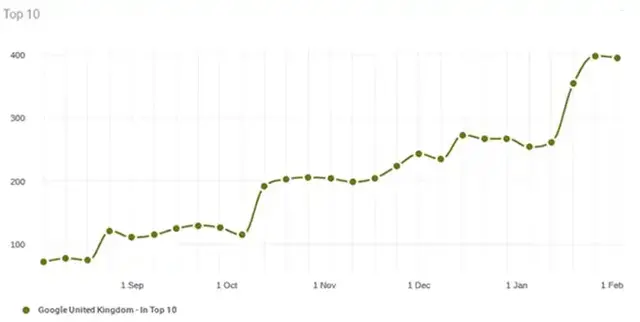
We’ve produced measurable local SEO wins for Peterborough organisations across professional services, technology, and trade sectors by tightening on-page relevance and improving how pages are structured, presented, and understood by search engines.
Client: Solicitors Practice – Peterborough
Problem: Pages competing against each other, weak titles and descriptions, service content lacking depth
Solution: Keyword mapping across core services, metadata rewrite, content expansion and refinement
Result: +52% uplift in organic traffic, page 1 visibility gained for 7 new high-intent service searches
Client: Software Provider – Peterborough
Problem: High drop-offs on key pages, confusing layout, poor topic focus
Solution: Page restructuring with clearer headings, improved internal linking pathways, structured data added where relevant
Result: Bounce rate down 25%, average time on key pages up 2x within 8 weeks
Client: Local Trades Company – Peterborough
Problem: Inconsistent metadata, missing image alt text, repeated copy across service areas
Solution: Full metadata and image optimisation pass, canonical fixes, unique content created for priority services
Result: +41% increase in local search impressions, clear improvement in click-through rate
These examples show what well-planned on-page SEO can do when the goal is to win more work from Peterborough searches. By improving metadata, content depth, and internal structure, we help pages become easier to find, easier to trust, and more likely to convert.
Tools & Technology We Use for On-Page SEO
We rely on proven, industry-standard tools to guide on-page optimisation decisions, so improvements for Peterborough-focused pages are based on evidence, not assumptions.
Our toolkit includes:
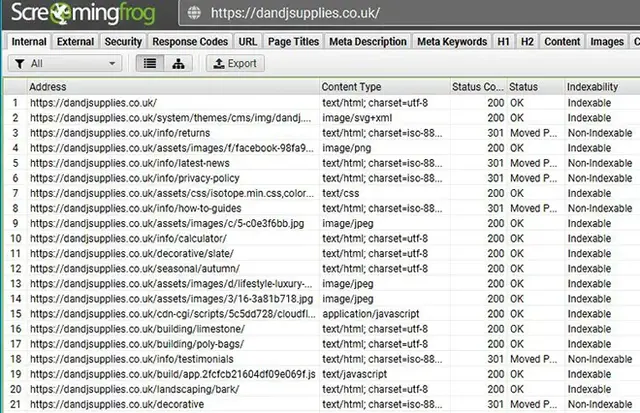
Screaming Frog and Sitebulb
For detailed crawls that surface technical issues, duplicate content risks, internal linking gaps, and page structure problems.
Google Search Console and Google Analytics
To track performance trends, uncover indexing and query opportunities, and measure how users behave on key landing pages.
Surfer SEO and Clearscope
For content analysis, topical coverage checks, and on-page benchmarks that help pages meet intent more effectively.
Ahrefs and Semrush
To identify keyword gaps, review competitor content approaches, and prioritise the on-page opportunities most likely to drive enquiries.
Google PageSpeed Insights and Lighthouse
To diagnose performance bottlenecks and improve Core Web Vitals, mobile usability, and overall page experience.
Schema.org Validator
To validate structured data and resolve errors that could prevent enhanced search features from appearing.
Grammarly and Hemingway Editor
To improve clarity, readability, and consistency so on-page copy is easier to understand and more persuasive.
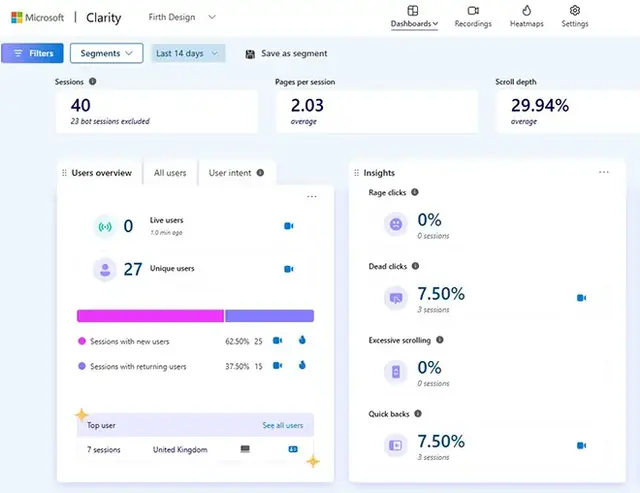
Hotjar and Microsoft Clarity
To understand user journeys through heatmaps and recordings, helping us refine layout, calls to action, and content placement.
Using this toolkit, every on-page SEO change is supported by data and testing, with a clear focus on measurable gains in visibility, engagement, and conversions for Peterborough search traffic.
Industries We Support
On-page SEO is now a baseline requirement, not a nice-to-have. Our on-page SEO service makes sure every important part of your website is tuned for visibility, relevance, and meaningful engagement.
We work with rankings and user experience side by side, improving how your pages appear in search, how often they earn clicks, and how confidently visitors move towards an enquiry. For Peterborough companies, that means pages that match local intent, load quickly, read clearly, and make it obvious what to do next. Whether you run an ecommerce site, a local service business, or a B2B operation, we tailor on-page SEO around your goals, your site structure, and the way your audience searches.
By combining proven SEO principles with practical improvements to content, metadata, and page structure, we help your site rank for the terms that matter and perform properly once users arrive. Because visibility is only half the job, the real win is turning that attention into customers.
-
Professional Services
-
Local Trades & Services
-
Retail & E-commerce
-
Franchise Businesses
-
Construction & Skilled Trades
-
Logistics & Transport
-
Food & Beverage
-
Automotive
-
Environmental & Sustainability
-
Beauty & Cosmetics
-
Wellness, Fitness & Lifestyle
-
Entertainment & Media
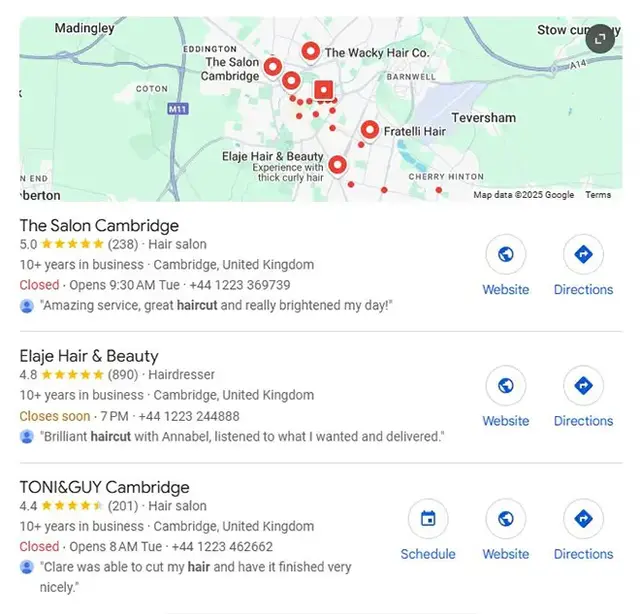
Local On-Page SEO for Cambridge
Your location plays a big role in how you show up in search. We strengthen local relevance by:
- Using location-led search terms naturally across key pages
- Building location pages with the right structure and intent match
- Keeping NAP details (Name, Address, Phone) consistent across your site and profiles
- Adding local structured data where it supports visibility
- Connecting to your Google Business Profile and key local landing pages
- Including maps, directions, and clear service area information
- Referencing relevant local organisations, venues, or communities where appropriate
- Showcasing Peterborough testimonials and results-driven case studies
- Writing location-specific FAQs that reflect real customer questions
- Improving consistency across local directories and citation sources
- Supporting review generation and helping you respond in a way that builds trust
- Using locally relevant imagery when it adds context and credibility
- Applying headings that reinforce local intent without forcing repetition
- Shaping content around Peterborough-specific needs, expectations, and search behaviour
Whether you serve customers in the city centre, Hampton, Werrington, Orton, or the wider Peterborough area, we help you stand out in local search results and win more enquiries from nearby customers.
Benefits of On-Page SEO
Strong on-page SEO improves more than rankings. It makes your website clearer, faster, and easier to use, which leads to measurable long-term gains:
- Stronger Search Visibility: Improve positions in Google for the terms that matter to your Peterborough audience
- More Qualified Organic Visits: Attract people actively looking for your services, not just general browsing traffic
- Better Page Experience: Faster load times and clearer structure help reduce drop-offs
- Higher Enquiry Rates: Well-organised content and stronger calls to action make it easier for visitors to take the next step
- Sustainable Growth: On-page improvements build a foundation that remains valuable as algorithms and competitors change
Combined, these benefits create a stronger platform for steady online growth. By improving content quality, site structure, and usability, we help your website attract the right people in and around Peterborough, keep them engaged, and convert more visits into enquiries over time.
Why Choose Doublespark for Peterborough On-Page SEO?
We’re not just another SEO agency. Doublespark brings:
- Decades of experience: Supporting Peterborough businesses and UK-wide brands since 2005
- Technical strength: Confident with specialist platforms including Screaming Frog, Surfer SEO, Ahrefs, Semrush, and more
- Clear reporting: Regular updates with agreed KPIs, practical insights, and scheduled strategy conversations
- Local understanding: We know what it takes to compete for visibility in Peterborough and the surrounding area
- Tailored delivery: Every campaign is built around your site, your market, and your growth targets, not a generic template
"Since working with Doublespark, organic traffic has more than doubled, and the site is now faster, cleaner, and far easier for customers to use." - Client in Peterborough
We combine local focus with proven SEO expertise to deliver measurable improvements that support steady growth and long-term results for Peterborough organisations.

What Our Clients Are Saying
5-Star Google Reviews That Reflect Our Commitment to Excellence
-
2 months ago
I have been with Doublespark since 2012. As a Cambridge SEO company they supported the online shop and the online marketing, helping more clients find and book our services. Gary has always been willing to help with any issues on the website and has been quick to respond when I have asked for any updates or changes to be made to the website. Highly Recommended
-
4 months ago
Great company to work with, on hand with tech queries and very proactive when an very rare issue arises.
-
6 months ago
Doublespark have looked after website maintenance and hosting for osteolabs since 2021. They keep the site running smoothly, deal with updates behind the scenes, and respond quickly whenever we need support.
-
8 months ago
most excellent people - helpful, knowledgeable and efficient.
-
9 months ago
Gary and the team at Doublespark are brilliant, we've worked together on a lot of very different digital marketing projects over a good many years. Always good results, always a good experience.


SEO Insights: Strategies, Trends and Tactics to Boost Organic Visibility

10 Search Strategies From BrightonSEO 2026
Ten things we brought back from brightonSEO 2026, from AI citation share to the conversion basics that still pay.

Optimising for Generative AI & Answer Engines
Discover how to optimise your SEO for AI Overviews and answer engines. Learn to adapt your content for generative results, build topical authority, and keep your brand visible in Google’s evolving search experience.
FAQs About Our On-Page SEO Services
On-Page Vs Off-Page SEO: What’s The Real Difference?
On-page SEO is the work carried out on your own website to make each page clearer, more relevant, and easier for search engines to understand. It covers the things you directly control, such as page content, headings, titles, internal links, image optimisation, page speed, mobile usability, and structured data. The aim is to remove confusion for both Google and your visitors, so the right pages appear for the right searches and users can quickly find what they need.
In practical terms, on-page SEO is where you turn a page into a strong landing page. That might mean rewriting a service page so it answers common questions, improving the hierarchy so headings make sense, tightening up the call to action, and ensuring the metadata accurately reflects what is on the page. For a Peterborough business, it can also involve making location relevance clearer, for example by building well-structured location pages, keeping contact details consistent, and making it obvious which areas you serve.
Off-page SEO is everything that happens away from your website that helps build trust and authority. The biggest part of off-page SEO is earning links from other websites, but it also includes brand mentions, PR coverage, listings, reviews, and signals that show people are aware of your business. Off-page signals help search engines decide whether your site is reputable compared to competitors, especially when many businesses offer similar services.
It helps to think of on-page SEO as making your site worthy of attention, and off-page SEO as earning that attention in the wider web. If your pages are slow, thin, or unclear, strong links will not convert well and you can end up wasting budget. Equally, if your site is well built but nobody references it, it can be harder to compete in tougher markets. The balance depends on where you are starting from and what is already in place.
There is also a simple dependency between the two. Off-page work often sends authority to a domain, but on-page work determines how that authority is distributed and which pages benefit. If your internal linking is messy or your pages compete with each other, link value can be diluted. On-page SEO helps ensure that when your site earns trust, the right pages receive the boost and the visitor journey makes sense once people arrive.
For Peterborough-focused growth, the best results usually come from getting the on-page foundations right first. That means each service has a clear page, each page targets a distinct intent, and the structure helps both crawling and navigation. Then off-page SEO becomes more effective because any authority you earn has a solid destination. You are not just trying to rank a homepage, you are building a set of pages that cover your services, locations, and supporting information in a way that search engines can confidently surface.
In short, on-page SEO improves relevance and usability on your site, while off-page SEO strengthens authority and credibility from outside it. When you combine both, you get compounding gains: better rankings, better click-through rates, and better conversion performance from the traffic you attract.
When Will You Start Seeing Results From On-Page SEO?
The time it takes to see results from on-page SEO depends on how much needs changing, how quickly your site gets recrawled, and how competitive your market is. Some improvements can show up surprisingly fast, while others take longer because they rely on search engines re-evaluating the page and comparing it against competing pages.
There are a few quick wins that can appear early. If a page already ranks but has a poor title or description, rewriting the metadata can improve click-through rates without needing a ranking change. That can happen within a couple of weeks once Google tests and updates the snippet. Similarly, fixing obvious technical blockers, such as noindex tags on important pages or broken internal links, can lead to faster discovery and better indexing behaviour.
Ranking improvements generally take longer because they involve reprocessing content, re-assessing relevance, and sometimes re-positioning a page within a cluster of similar results. If we rewrite a Peterborough service page to better match search intent, expand key sections, and improve internal linking, Google still needs time to recrawl the page, understand the changes, and decide whether it deserves a higher position. For many sites, meaningful movement is typically seen over 6 to 12 weeks, but that is not a fixed rule.
The size of your website also matters. A small site with a handful of core pages can be updated quickly and recrawled more frequently. A large site with hundreds or thousands of URLs may take longer for changes to be fully processed, especially if the crawl budget is limited or the internal linking makes it harder for bots to reach deeper pages.
Competition is another big factor. If you operate in a crowded space in and around Peterborough, where multiple businesses are investing in SEO, gains can still happen but you are often fighting for smaller increments. In less competitive niches, on-page improvements can move a page from obscurity to page one far more quickly.
It is also important to separate visibility from outcomes. You might see rankings improve for some terms while enquiries stay flat if the page does not convert well. That is why we track more than just positions. We look at impressions, clicks, page engagement, and lead actions. Sometimes the best early result is not a higher ranking but better quality traffic and stronger conversion performance because the page is clearer and more persuasive.
On-page SEO is best treated as a cycle rather than a one-off task. Initial changes create a baseline, then performance data highlights what to refine next. Pages that are close to page one can be pushed further with content tuning, better internal links, and clearer intent matching. Over time, those repeated improvements build a stronger site that is easier to rank across multiple searches, including local queries tied to Peterborough.
So the honest answer is that you can often see early indicators within weeks, but stronger and more consistent gains usually show over a few months, especially if the goal is improved rankings and sustained organic growth.
Is It Realistic To Handle On-Page SEO Yourself?
It is realistic to do some on-page SEO tasks yourself, especially if your site is small and you have time to learn. Many business owners and in-house teams can make sensible improvements like updating a page title, rewriting a paragraph to be clearer, or adding internal links between related pages. If you are a Peterborough business with a handful of service pages, those basic steps can make a noticeable difference.
The challenge is that effective on-page SEO is not just a checklist. It involves understanding intent, prioritising the right pages, and making changes in a way that supports the whole site rather than creating new issues. For example, adding keywords everywhere can do more harm than good if it makes the copy awkward, repeats the same phrases on multiple pages, or causes several pages to compete for the same searches.
Another common problem is not knowing what to tackle first. On-page SEO includes content, structure, internal linking, indexation, performance, and structured data. If you focus on small tweaks while missing bigger blockers, progress can be slow. A site might have thin service pages, weak local relevance, and messy URL structure, but the team spends weeks polishing blog posts that are not aligned with commercial goals. A good strategy avoids that by mapping work to outcomes, such as more calls, more form submissions, or more footfall from nearby searches.
Tool access and interpretation matter too. Many platforms can surface issues, but you still need to decide what is important, what is noise, and what is risky. A crawl report might list hundreds of warnings, and without experience it is easy to fix the wrong things or implement changes that break tracking, create redirects that slow the site, or remove content that was contributing to rankings.
There is also the technical side. Some on-page improvements require code or CMS-level changes, such as setting canonical tags correctly, addressing duplicate templates, improving Core Web Vitals, or implementing structured data. You do not need to be a developer to manage SEO, but you do need to know how changes affect crawlability, indexation, and performance.
That said, doing parts in-house can work well with the right structure. A common approach is to have an expert create the audit, roadmap, and templates, then your team applies the changes. This keeps control inside the business while avoiding guesswork. It is especially useful if you publish content regularly and want your team to follow a consistent on-page standard.
If time is tight, outsourcing can be more cost-effective than it seems. The cost is not just hours spent editing pages, it is the opportunity cost of delaying improvements and the risk of mistakes that take months to undo. For many Peterborough businesses, professional on-page support delivers faster progress because the work is planned, prioritised, and tested properly.
So yes, you can do some on-page SEO yourself. The key is knowing where your capability ends, where the risk increases, and how to make sure every change supports rankings and conversions rather than just sounding more SEO-friendly.
Do You Need A One-Off On-Page Project Or Ongoing Support?
Both one-off and ongoing on-page SEO can be the right answer, depending on your starting point and what you want your website to achieve. The main difference is whether you need a structured clean-up and rebuild, or a continuous process of improvement as your market, content, and competitors change.
A one-off project is often best when the site needs a clear reset. This includes situations like launching a new website, migrating to a new platform, redesigning templates, or expanding services into new areas. In these cases, it makes sense to run a full on-page audit, fix technical issues, improve site structure, and rewrite priority pages so the site starts from a solid baseline. For a Peterborough business, that might mean creating a better service page structure, clarifying local relevance, and improving the conversion journey so traffic turns into enquiries.
A one-off project can also work when you have an internal team that can maintain standards afterwards. If you have someone who can keep content updated, follow a page template, and keep an eye on performance, a well-delivered project gives you a strong foundation to build on. You get the biggest fixes done, and you carry the momentum forward in-house.
Ongoing support becomes valuable when you want continuous growth or when the website is regularly changing. Search results do not stand still. Competitors publish new content, Google adjusts how it interprets intent, and your own business evolves. New services are added, new FAQs are needed, and older pages can become outdated or less relevant. Without ongoing work, performance can plateau or slowly decline as the site falls behind current expectations.
Ongoing work is also useful because SEO improvements are often iterative. After the initial optimisation, the data reveals what to refine next. You might learn that a Peterborough landing page gets impressions but few clicks, which suggests the snippet needs work. Or you might see strong clicks but low enquiries, which points to page structure and calls to action. Those insights are hard to act on in a one-off model because they appear after the work is complete.
A sensible ongoing plan usually includes periodic crawling, content reviews, internal link improvements, performance monitoring, and targeted page updates. It also includes supporting new content, so every new page is built correctly rather than needing a repair job later. This is particularly helpful for sites that rely on local visibility, where location pages, services, and trust signals need to stay accurate and consistent.
For many businesses, the best fit is a hybrid approach. Start with an initial project to fix the foundations, then move into lighter ongoing support that focuses on refinement, expansion, and keeping the site aligned with what searchers want. That approach tends to produce the most reliable long-term gains, without wasting time on constant activity that does not move the needle.
The right choice comes down to your resources, how often your site changes, and how aggressively you want to grow in organic search in Peterborough and beyond.
Which Tools Are Used For On-Page SEO And Why Do They Matter?
On-page SEO involves hundreds of small decisions, so tools matter because they replace assumptions with evidence. A good toolkit helps us crawl your website like a search engine, understand how users interact with pages, spot technical barriers, and measure whether changes are actually improving performance. Tools do not do the job on their own, but they make sure the work is precise and prioritised.
The first category is crawling and auditing. Crawlers scan your site and report on key factors like page titles, headings, status codes, redirects, canonical tags, duplicate content signals, internal linking depth, and indexation hints. This is how we find issues that are invisible when you only look at the front end. For example, a Peterborough service page might look fine to a visitor but be blocked by a canonical pointing elsewhere or buried behind poor navigation. Crawling shows what search engines are likely to see.
The next category is performance and search data. Platforms that pull data from Google help us understand which pages are appearing for searches, what queries trigger them, and how often people click. This is essential because it tells us where the opportunity is. Sometimes the best on-page win is not writing a brand new page, it is improving an existing page that already has impressions and just needs better intent match, a stronger snippet, or more helpful content.
Content analysis tools support the writing and structure side. They can highlight topical gaps, related phrases, and semantic coverage based on what currently performs well for similar searches. Used properly, these tools help shape pages so they answer questions thoroughly and naturally, without falling into awkward keyword repetition. They also help benchmark your pages against what users are used to seeing in the results.
Competitor and keyword platforms are another important piece. They help identify which topics competitors cover, which pages bring them traffic, and where your site has gaps. For a Peterborough business, that might reveal that competitors have stronger location pages, better service comparisons, or clearer pricing guidance. The goal is not to copy, it is to understand what the market expects and then produce something more useful and more aligned with your brand.
For page experience, diagnostics tools highlight speed and usability issues, including Core Web Vitals metrics. These insights guide changes like image compression, script optimisation, font loading improvements, and layout stability fixes. Improving page experience supports conversions and can also help with search performance, particularly on mobile where many local searches happen.
Structured data validators are used when implementing schema. They help ensure markup is valid and eligible for enhanced result features. Mistakes in structured data are common, and validation prevents silent failures.
Finally, user behaviour tools can show how people actually scroll, where they pause, and where they drop off. That insight is valuable because on-page SEO is not only about rankings, it is also about engagement and action. If visitors from Peterborough searches are not converting, behaviour data often explains why.
In short, tools help us find issues, prioritise fixes, guide content improvements, and track results. The value comes from how we interpret the data and turn it into practical changes that improve visibility and enquiries.
How On-Page SEO Improves User Experience
On-page SEO and user experience are closely connected because the same changes that help search engines understand your pages often make the site easier for people to use. When a page is well structured, loads quickly, and answers the right questions, visitors are more likely to stay, trust the business, and take action. That engagement can also support SEO performance because it reduces pogo-sticking behaviour and improves the overall quality signals around your site.
One of the biggest UX benefits comes from clarity. Strong headings, sensible paragraphing, and clear page sections make information easier to find. Many visitors skim first, especially on mobile. If your Peterborough service page opens with a wall of text, users can miss key points and leave. Reworking the hierarchy, adding short sections, and using descriptive headings helps people navigate without friction.
Internal linking is another area where SEO work improves UX. Links between related services, FAQs, and supporting pages help visitors move through the site logically. Instead of hunting around menus, they can follow clear pathways. This is particularly important for local sites where people want quick reassurance about location, pricing, availability, and how to get in touch. Thoughtful linking reduces dead ends and keeps users moving towards conversion.
Metadata also affects user experience, even before the click. Page titles and descriptions set expectations. When a snippet accurately reflects what the page offers, the visitor arrives with the right intent and is more likely to stay. If the snippet is vague or misleading, people bounce quickly, which is bad for business and can limit SEO performance over time.
Page speed and mobile usability are obvious UX factors. Local searches frequently happen on phones, often when the user needs something quickly. Slow pages, layout shifts, and tap targets that are hard to use create frustration. On-page SEO often includes performance improvements such as compressing images, reducing script bloat, and improving layout stability. These changes make pages feel smoother and more trustworthy.
Content quality is equally important. Visitors want answers: what you do, who it is for, how much it costs, how long it takes, and what happens next. If your content is thin or generic, users have to guess. Strong on-page SEO includes writing that is specific, helpful, and aligned with real questions. For a Peterborough business, that can mean clearer service descriptions, more local reassurance, and straightforward next steps.
Accessibility improvements often come as part of on-page work too. Proper heading order, descriptive image alt text, and readable copy support users who rely on assistive technology. Accessibility is good UX, and it also makes your content easier for search engines to interpret.
Finally, on-page SEO supports conversion-focused UX. If a page ranks but does not convert, it is not doing its job. Adjusting the layout, strengthening calls to action, improving trust signals, and making contact options easy to find can increase enquiries without needing more traffic. That is why on-page SEO is a strong investment for Peterborough businesses: it improves the experience for the visitors you already have while also helping you win more visibility.
Do You Optimise Pages For Voice Search And Featured Snippets?
Yes, on-page SEO can be adapted to improve visibility for voice-style queries and featured snippets, but it needs to be approached in a practical way. The aim is not to chase a gimmick. It is to structure content so it answers questions clearly, uses natural language, and makes it easy for search engines to extract the most relevant information. Those same changes also improve user experience for people reading the page.
Voice searches often sound like complete questions rather than short keyword phrases. Someone might ask their phone something like, what is the best way to choose a solicitor in Peterborough, or how quickly can an electrician come out near me. Even when typed, many searches now look similar. Optimising for this means including question-led sections, plain language explanations, and direct answers that match what people actually ask.
Featured snippets are usually pulled from pages that provide a clear, concise response near the top of a relevant section. That does not mean your content should be short. It means the key answer should be easy to find within a well-written page. A good pattern is to include a short summary answer, followed by a deeper explanation that covers detail, context, and next steps. This serves both search engines and users.
Formatting plays a big role. Clear headings that mirror common questions, short paragraphs, and structured lists can help Google understand the relationships between topics. If you offer services in Peterborough, adding an FAQ section that tackles local intent can support both snippets and conversion. The focus should be on real questions your customers ask, not random keyword-stuffed variations.
Schema markup can also help, particularly FAQ schema where it is appropriate and compliant. Structured data does not guarantee a snippet or an enhanced result, but it can improve clarity and eligibility in some contexts. It is important that structured data matches visible content and is implemented correctly, otherwise it can be ignored.
Another part of voice and snippet optimisation is intent matching. A page needs to genuinely satisfy the query. If the search is informational, a hard sales page may not win the snippet. If the search is transactional, a purely informational article might not convert. The best approach is usually to create pages with a clear purpose and then support them with related content that answers questions earlier in the buying journey.
Local context can strengthen relevance too. Voice searches often have local intent, even if the user does not say the location. Devices infer it. That is why it helps if your site makes service areas, location details, and local trust signals clear. For example, a page that explains a service and also clearly states you cover Peterborough and nearby areas can be a better match for local voice queries.
Overall, optimising for voice search and featured snippets is about making content easier to understand and easier to extract. When done properly, it improves standard rankings as well, because it aligns with what search engines are trying to reward: useful, well-structured answers.
Can On-Page SEO Improve Local Rankings In Peterborough?
On-page SEO is one of the strongest levers for local rankings because it helps search engines understand where you are, what you offer, and which searches your pages should appear for. For Peterborough businesses, local visibility often comes down to how well your site communicates service relevance and location relevance at the same time, without making the content feel forced.
Local rankings are influenced by multiple factors, including your Google Business Profile, reviews, and local authority signals. However, your website still plays a major role, especially for organic results and for reinforcing trust around map visibility. If your pages are vague, inconsistent, or thin, it is harder for search engines to be confident that your business is the right result for someone nearby.
One key part is building and structuring the right pages. If you serve multiple areas, you may need dedicated location pages or service area sections that clearly explain coverage. Those pages need to be useful and distinct, not repetitive templates. A strong Peterborough page should include details that match local intent, such as how you deliver the service locally, what to expect, and how to contact you. Local relevance should be natural, supported by real information rather than repeated place names.
Consistency of business details is also important. Your name, address, and phone number should be consistent across the site, particularly in the footer and contact page. Mixed formats, old addresses, or missing details can reduce trust. Clear contact information also supports conversions, which is the point of ranking in the first place.
Local structured data can help too. Adding appropriate schema can clarify business details and page purpose. It is not a magic switch, but it supports understanding when implemented correctly. Likewise, internal linking helps search engines and users connect related pages, such as linking from a Peterborough landing page to specific services, case studies, and FAQs. This makes the site more coherent and helps authority flow to the pages that need it.
Content matters heavily for local performance. Many local sites rely on short pages that say very little. Expanding service pages with helpful detail, answering real questions, and including trust signals can make a big difference. Trust signals might include testimonials, local case studies, accreditations, and evidence of local work. The goal is to help users feel confident and to help search engines see that the page is genuinely valuable.
Page experience also plays a role. If a local user clicks a result and the page is slow or hard to use on a phone, they leave. That is a poor experience and it hurts conversions. Improving speed, layout stability, and mobile usability makes it more likely that local traffic turns into enquiries.
So yes, on-page SEO can materially improve local rankings in Peterborough. It strengthens relevance, supports trust, and improves the user journey. When combined with a well-managed Google Business Profile and wider local authority signals, it becomes a reliable way to win more visibility and more enquiries from nearby searches.
How Often Should On-Page SEO Be Reviewed And Updated?
On-page SEO is not something you do once and forget. Websites change, competitors improve, and search behaviour shifts over time. Even if your services stay the same, the way people search for them can evolve, and search engines can adjust what they consider the best result for a query. Regular review keeps your pages accurate, relevant, and competitive.
A sensible baseline for many businesses is a quarterly review of core pages. That includes checking metadata, content relevance, internal linking, and key technical signals. Quarterly reviews are often enough to catch gradual performance drift and to plan improvements without turning SEO into constant disruption.
However, some sites benefit from more frequent checks. If you publish content regularly, run seasonal promotions, or operate in a competitive local market, monthly reviews can be worthwhile. This is especially true if you are actively trying to grow visibility for Peterborough-related searches, because small changes in local results can make a big difference to lead volume.
There are also event-based moments when updates should happen. A site redesign, a CMS change, a service expansion, or a location move should trigger an on-page review. Even small changes like adding new sections or new navigation can affect internal linking and crawling, so it is important to validate that everything still works as intended.
Content freshness is another reason to revisit pages. If a page references outdated information, old pricing, or old processes, it can reduce trust. Search engines also prefer content that remains accurate and useful. Updating does not always mean rewriting everything. It might be refining sections, adding a missing FAQ, improving clarity, or updating examples and proof points to reflect your current work.
Technical upkeep matters too. Over time, sites pick up redirect chains, broken links, duplicate pages, and performance bloat from plugins or scripts. Regular crawling and performance checks help catch these issues early, before they become a bigger problem. Many local businesses do not notice technical decay until rankings drop, but by that point recovery can take longer.
It is also worth keeping an eye on intent changes. Sometimes Google shifts what it wants to show for a query. A search that used to favour service pages might start favouring guides or comparisons. If you notice impressions rising but clicks falling, or rankings staying stable while enquiries drop, it can be a sign that your page no longer matches intent as well as it used to. That is when targeted on-page updates are most valuable.
For Peterborough businesses, a practical approach is to identify your top money pages and keep them under a regular review schedule. Support pages and blog content can be updated less frequently, based on performance. This keeps effort focused where it has the biggest commercial impact.
Regular on-page SEO updates are not about chasing every algorithm change. They are about maintaining a high standard, responding to what the data shows, and ensuring your site stays useful and competitive over the long term.
Will On-Page SEO Changes Affect Your Design Or Branding?
On-page SEO improvements should not damage your design or branding. In most cases, the work happens within the content and technical structure, not the visual identity. The aim is to make pages clearer, more consistent, and easier to understand for both search engines and users, while keeping the look and feel aligned with your brand.
Many on-page changes are invisible to visitors. Examples include updating title tags and meta descriptions, refining canonical tags, improving schema markup, fixing broken links, and cleaning up redirect issues. These improvements can influence how your site appears in search results and how it is interpreted by crawlers, but they do not alter your page layout or styling.
Other changes are visible but still brand-safe. Improving headings and rewriting content does change what people read, but it should be done in your tone of voice. Good SEO copywriting does not mean keyword-stuffed text. It means clear writing that answers questions, explains benefits, and guides the user to the next step. For a Peterborough business, that might include clearer statements of service coverage, more specific proof points, and better calls to action, all written to match your brand.
Sometimes on-page SEO recommendations include light UX improvements. For example, if a page is hard to scan, we might suggest breaking long paragraphs into sections, adding clearer subheadings, or improving the placement of key information. If mobile usability is poor, we might recommend adjustments to spacing, button sizes, or layout stability. These are not rebrands. They are usability refinements that help visitors engage with the page and reduce drop-offs.
Where changes touch design elements, the right approach is collaboration. If you have an in-house designer or developer, we provide clear guidance and reasoning, then work together to apply changes without compromising brand standards. If you do not have internal resources, we can implement changes carefully so typography, colours, imagery style, and layout conventions remain consistent.
It is also worth noting that design and branding can benefit from SEO-aligned clarity. If visitors arrive from local Peterborough searches and the page immediately confirms they are in the right place, that strengthens trust. Clear messaging, consistent navigation, and easy-to-find contact options support brand perception. People associate ease of use with professionalism, so better on-page structure can make your brand feel stronger, not weaker.
The only time branding is at risk is when SEO is done badly, for example by forcing awkward keywords into headings, overloading pages with repetitive location terms, or adding clutter purely for search engines. That is not how we work. The goal is to improve performance while maintaining a clean, credible presentation.
So, on-page SEO should not undermine your design or branding. When done properly, it improves clarity, strengthens user confidence, and helps your site perform better in search without changing the identity you have built.
More Of Our SEO Services
Serious about growth? Our SEO, PPC and web services are built to deliver. Explore what we can do for your business.