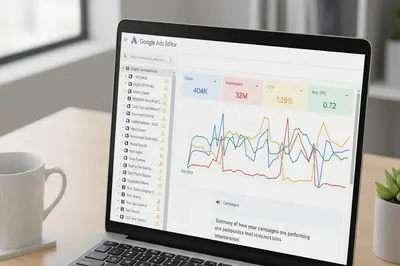
Display Advertising Services in Peterborough
Boost awareness across Peterborough and the UK and bring in more enquiries with strategically managed display campaigns built around your audience, budget, and conversion goals.
Grow Awareness Fast with High-Impact Display Advertising
Tell us who you most want to reach in Peterborough and what success looks like, and we'll build display campaigns that put your brand in front of the right people. It's run by the same team behind our wider work as a Peterborough PPC Agency, so display sits inside a joined-up paid media strategy.
Explore Key Sections of This Page
What Is Display Advertising?
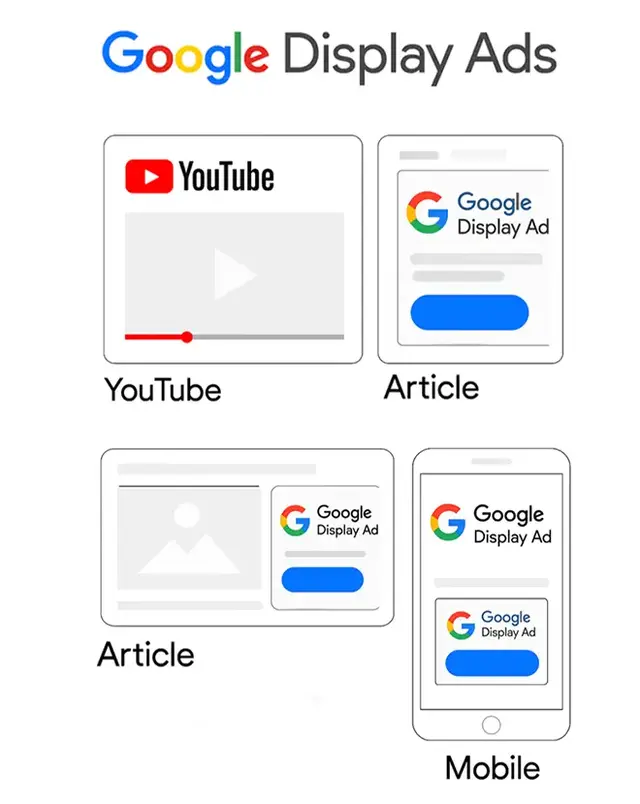
Display advertising uses eye-catching banner and rich media ads across the Google Display Network and selected programmatic inventory to put your services in front of the right people at the right time. It means your brand can appear on the websites, videos, and apps your customers in and around Peterborough use every day, helping you stay visible and memorable.
Strong display performance is not just about nice design. It starts with understanding who you want to reach and what will move them to act. We build campaigns around real audience signals, combining interest and intent targeting, relevant placements, and carefully planned remarketing so your ads show up when prospects are most likely to engage.
Performance-Driven Optimisation
We refine display campaigns using live results, not guesswork. By monitoring metrics such as view-through activity, click quality, on-site engagement, and conversion paths, we reduce wasted spend and steadily improve return on investment. Creative is tested alongside targeting, so messaging and formats keep improving as the campaign runs.
Reach People Across Every Device
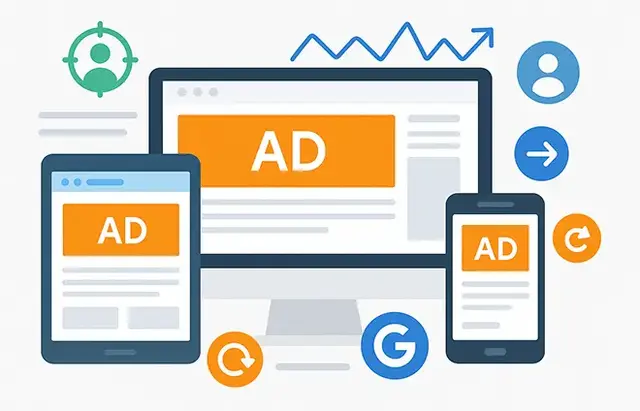
Potential customers will see your ads on mobiles during commutes, on tablets at home, and on desktops at work. We use responsive ad formats and device-aware creative to keep your message clear and consistent, whatever screen it appears on.
Display is ideal for building awareness early in the buying journey, then bringing people back later with conversion-focused remarketing and tailored messaging based on the pages they viewed or actions they took.
With Doublespark managing your display activity, you get a structured strategy, accurate targeting, and ongoing improvements designed to produce measurable outcomes.
Why Display Advertising Matters
Display advertising works alongside search and social by keeping your brand front-of-mind, so people in and around Peterborough recognise you before they are ready to click, call, or buy.
- Broaden awareness across the wider web
- Build affordable reach with repeat visibility
- Target specific audiences with detailed control
- Run engaging formats, including rich media and video
- Align activity to full-funnel goals, from awareness to enquiry
“Buyers who regularly see a vendor’s banner … are 84 % more likely to engage with that vendor in the long run, and 32 % more likely to shortlist them for future purchases.” – LinkedIn
With Doublespark managing your display campaigns, your brand stays visible and consistent across your audience’s day-to-day browsing, from local research to repeat visits and remarketing.

Our Display Advertising Services
We deliver a full range of display advertising services built to perform at each point in your funnel, from first exposure to repeat visits and enquiries.
Programmatic Display
We plan and buy inventory through leading exchanges using automated bidding and audience signals, then refine performance with controlled frequency, brand-safe placements, and ongoing creative testing. This approach helps you scale reach across Peterborough and beyond without losing efficiency.
Google Display Network Campaigns
Tap into the reach of Google’s network with campaigns structured around the audiences that matter most to you. We manage placements, audience layers, exclusions, and format selection to keep spend focused and avoid low-quality traffic.
Remarketing Ads
Bring previous visitors back with tailored visuals that reflect what they viewed and where they are in the decision process. We build remarketing journeys that strengthen recall, support conversion, and prevent overspending through sensible caps and segmented lists.
Video Display Ads
Use video to explain, demonstrate, and build trust. We run YouTube and in-app video activity with clear objectives, from awareness to consideration, and optimise against meaningful engagement rather than vanity metrics.
Personalised Creative Delivery
Serve variations of headlines, images, and calls-to-action based on audience intent and behaviour, so the message stays relevant. This is especially effective for multi-service businesses and remarketing where context matters most.
Mobile-First Display
Most browsing happens on phones, so we design and deploy mobile-ready creatives that load quickly, read clearly, and encourage action without feeling intrusive.
Advanced Audience Targeting
Define audiences using first-party data, on-site behaviour, in-market intent signals, and lookalike modelling where appropriate. The goal is simple: reach people more likely to convert, not just people who can be reached.
Multi-Region and International Campaigns
If you operate outside the UK, we can run display activity across multiple markets with localised messaging, scheduling, and landing page alignment, while keeping reporting consistent and comparable.
Doublespark manages every moving part of your display strategy, with clear reporting and measurable outcomes tied back to your commercial goals.
Our Display Advertising Process
Every display campaign we run follows a clear, accountable process, so you always know what we are doing, why we are doing it, and what it is delivering.
- Objectives Workshop: Agree the outcomes that matter, define your Peterborough audience, and pin down the actions you want people to take.
- Campaign Blueprint: Create audience segments, decide where ads should appear, set sensible frequency levels, and plan creative angles.
- Build and Tracking Setup: Develop ads, configure targeting, and put reliable measurement in place so results can be attributed with confidence.
- Launch and Learn: Roll out carefully, then test audiences, messaging, and formats to identify what actually performs.
- Continuous Improvement: Optimise placements, bids, exclusions, and creative rotation to keep efficiency high and waste low.
- Clear Reporting: Share straightforward updates covering reach, engagement, assisted impact, and conversions, with practical next steps.
With Doublespark managing your display activity, you get structured planning, disciplined optimisation, and measurable progress from start to finish.
Recent Results
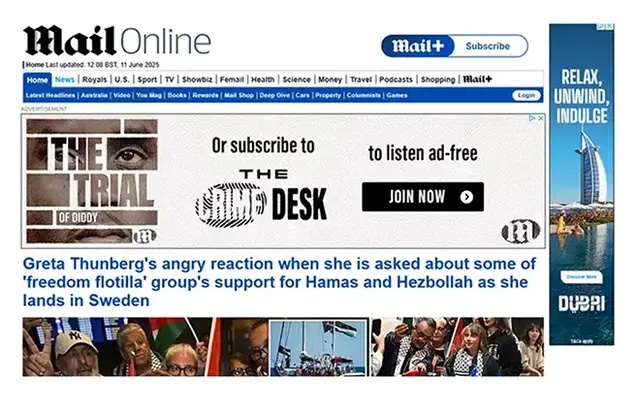
Doublespark’s display advertising work delivers trackable gains for organisations in Peterborough and across the UK.
Client: Retail Ecommerce Brand – UK Market
Challenge: Low awareness against well-known competitors
Approach: Always-on display coverage with rich media, frequency controls, and intent-led custom audiences
Outcome: +68% increase in branded search interest and +19% uplift in assisted conversions within 8 weeks
Client: B2B Software Provider – UK
Challenge: Display clicks were not translating into qualified leads
Approach: Segmented remarketing and personalised creative variations aligned to CRM stages and key pages visited
Outcome: 2.7x improvement in CTR and +38% rise in booked demos over 10 weeks
Client: Peterborough Hospitality Business
Challenge: Needed stronger local visibility during peak trading periods
Approach: Location-focused mobile display with time-based scheduling, exclusion lists, and repeat-visit remarketing
Outcome: +81% increase in online bookings and a 57% uplift in returning customers
From local Peterborough brands to UK-wide campaigns, our display strategies are built around measurable impact, not guesswork.
Tools & Technology We Use
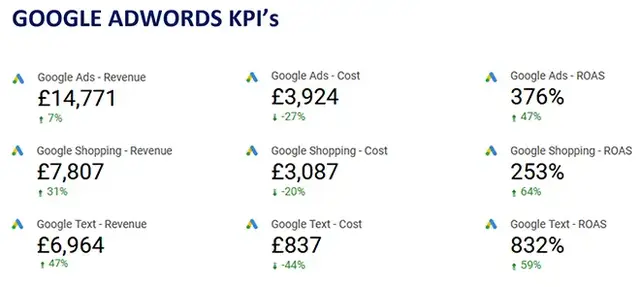
We do not make assumptions. Our display campaigns are guided by performance data and strengthened by analytics, automation, and creative workflows that keep decisions grounded in results.
Our toolkit typically includes:
DV360 (Display & Video 360)
Used for programmatic buying across premium inventory, with detailed controls for audience building, targeting layers, brand safety, and optimisation at scale.
Google Ads Placement and Audience Insights
Helps us identify the sites, topics, and audience groups most likely to perform, so budgets are directed towards placements that match your goals.
Looker Studio & GA4
Combines live dashboards with behavioural reporting, showing how people interact with your site after seeing or clicking an ad. This supports smarter creative decisions and tighter targeting over time.
Optimisation Automation and Custom Rules
We use automation platforms and scripts to monitor performance, spot waste quickly, and apply scalable improvements across targeting, exclusions, and bidding.
Attribution and Conversion Tracking
Where appropriate, we connect attribution tools and conversion integrations to measure assisted value, capture stronger signals, and make remarketing more effective using first-party data.
Google Tag Manager (GTM)
Makes tracking management cleaner and more reliable, allowing us to deploy event tags, remarketing setup, and measurement updates without constant site code changes.
Creative Production Tools
We produce and test banners, HTML5 assets, and video creatives designed for the placements you are buying, with variations built for different audiences and stages of intent.
Doublespark’s approach combines the right technology with disciplined optimisation, so every display decision is backed by evidence and focused on measurable outcomes.

Industries We Support
Display advertising is not about chasing impressions. It is about being remembered for the right reasons, by the right people, at the moments that influence decisions. Our Peterborough-focused display advertising services blend precise targeting with strong creative to maximise impact.
Whether you are a local business looking to build awareness across Peterborough or a growing brand promoting a new service or product line, we develop display campaigns that pair audience insight with clear, compelling visuals. From programmatic banners to location-led mobile activity, we create strategies designed to be noticed and to drive meaningful action.
Each campaign is shaped around your objectives, using demographic signals, browsing behaviour, and platform performance data to place your message in the environments your audience already trusts and uses. The outcome is straightforward: better budget efficiency, stronger visibility, and results you can measure, locally and beyond.
-
Healthcare & Medical
-
Retail & E-commerce
-
Professional Services
-
Franchise Businesses
-
Construction & Skilled Trades
-
Logistics & Transport
-
Manufacturing & Industrial
-
Automotive
-
Environmental & Sustainability
-
Beauty & Cosmetics
-
Public Sector & Government
-
App & Software Developers
Display Advertising for Peterborough Businesses
We understand Peterborough, from the city centre around Cathedral Square to the retail footfall at Queensgate and the business hubs at Lynch Wood. Our display campaigns use location-led targeting, locally relevant creative, and messaging that feels familiar to your audience, so your ads land with more credibility and intent.
- Location targeting by postcode sectors, radius, or key areas across Peterborough
- Creative tailored to local buying triggers, seasonal demand, and regional intent
- Maps and location assets to support visits, calls, and directions where relevant
- Peterborough landing pages aligned to your services, offers, and the audiences you want to reach
With Doublespark, your brand shows up in the places Peterborough customers browse every day, helping you build recognition and drive measurable action.
Benefits of Professional Display Advertising Management
Working with Doublespark on display advertising gives you a structured, results-led approach that grows visibility while keeping performance measurable and accountable.
- Broader Reach
Your brand appears across a wide range of relevant websites, apps, and placements, building recognition at scale without relying on people searching for you first. - Sharper Targeting
Reach the audiences that matter most using a combination of location signals, interests, intent, on-site behaviour, device type, and audience lists. - More Efficient Budget Use
Control spend with smart bidding, placement exclusions, and frequency limits that reduce wasted impressions and focus investment on what performs. - Ongoing Improvements
We analyse results continuously and refine targeting, creative variations, and placements so performance strengthens over time rather than plateauing. - Clear Measurement
Track what is working through conversion reporting, assisted value, view-through impact, and transparent updates that link activity back to outcomes.
With Doublespark managing your display activity, campaigns are planned properly, executed with care, and improved consistently to support measurable growth.
Why Choose Doublespark for Display Advertising
Our Peterborough-focused team brings years of hands-on digital marketing experience, creative thinking, and analytical rigour to every display campaign we manage.
- In-house Capability - Designers, analysts, and strategists working as one team
- Display Optimisation Focus - Ongoing testing and refinement, including dynamic creative where it makes sense
- Clear Visibility - Reporting that shows what is happening, what is changing, and why
- Evidence-Led Strategy - Decisions based on performance signals, not hunches
- Consistent Results - Experience across both local Peterborough campaigns and wider UK activity
“From awareness to enquiries - Doublespark helped us get in front of the right people and convert more of them. The reporting was clear and the results spoke for themselves.” - Peterborough Client
Choose Doublespark and turn display advertising into a measurable channel that supports real business growth.

What Our Clients Are Saying
5-Star Google Reviews That Reflect Our Commitment to Excellence
-
2 months ago
I have been with Doublespark since 2012. As a Cambridge SEO company they supported the online shop and the online marketing, helping more clients find and book our services. Gary has always been willing to help with any issues on the website and has been quick to respond when I have asked for any updates or changes to be made to the website. Highly Recommended
-
4 months ago
Great company to work with, on hand with tech queries and very proactive when an very rare issue arises.
-
6 months ago
Doublespark have looked after website maintenance and hosting for osteolabs since 2021. They keep the site running smoothly, deal with updates behind the scenes, and respond quickly whenever we need support.
-
8 months ago
most excellent people - helpful, knowledgeable and efficient.
-
9 months ago
Gary and the team at Doublespark are brilliant, we've worked together on a lot of very different digital marketing projects over a good many years. Always good results, always a good experience.


PPC Insights: Strategies for Maximising ROI

Google Ads Labs: What It Means for PPC Plans
A UK PPC agency guide to Google Ads’ new Labs hub. Discover how to test emerging ad features safely, manage campaign risks, and measure performance gains while gaining early-mover advantage.

How to Boost Google Ads Conversions in 2025
Learn how to raise your Google Ads conversion performance in 2025. Track key metrics, refine landing pages, and turn valuable insights into measurable business growth.
FAQs About Our Peterborough Display Advertising Services
How Do Display Ads Reach People Online and What Counts as Display Advertising?
Display advertising is the part of paid media that places visual messages in front of people while they browse the web rather than when they type a query into a search engine. Instead of relying on text alone, it uses banners, responsive image units, rich media and video placements that appear on news sites, local publications, industry blogs, apps and YouTube. For Peterborough organisations, it is a practical way to stay visible across the day-to-day digital routes your customers take, from researching a purchase at home to comparing suppliers at work.
What A Display Ad Actually Looks Like
A display ad can be as simple as a static image with a clear offer, or as advanced as an interactive HTML5 banner that animates, expands, or adapts to different screen sizes. Many campaigns use responsive ads that automatically combine your headlines, descriptions and images into multiple layouts to suit each placement. Video is also part of display, often shown in-feed, in-app, or as skippable placements on YouTube. The common thread is that the ad is delivered into content environments, not search results, so it needs to communicate quickly and clearly.
How Ads Are Bought and Served
Most display inventory is purchased through automated auctions. On the Google Display Network, you set targeting rules and bid strategies, and Google matches your ads to available placements that fit those rules. Programmatic buying via platforms such as DV360 works similarly, but can provide access to premium publishers, private marketplace inventory, and deeper controls for brand safety and frequency. In both cases, the ad serving system decides, in milliseconds, whether your ad should appear for a specific person on a specific page, based on targeting rules, bids, and performance signals.
How Targeting Works In Practice
The strength of display is the range of ways you can define who should see your message. Targeting can be built around context, audiences, or behaviour. Contextual targeting places ads on pages related to your topic, for example home improvement content if you sell building services. Audience targeting uses signals like interests and intent, so you can reach people who have shown recent buying behaviour in relevant categories. Remarketing uses your own website data to reach past visitors again, which is especially useful when customers do not convert on their first visit.
What A Campaign Is Trying To Achieve
Display can support multiple goals, but it performs best when the objective is explicit. Awareness activity aims to maximise qualified reach while controlling frequency, so you build recognition without annoying people. Consideration campaigns focus on driving engaged visits, such as people who spend time on key pages or download a guide. Conversion-led display uses tighter audiences, stronger calls-to-action, and landing pages designed for form fills, phone calls or purchases. Because display often supports longer journeys, success is usually a mix of immediate conversions and assisted impact.
Measurement And Quality Control
Performance is tracked through impressions, clicks and on-site actions, but a well-run campaign also monitors view-through impact, assisted conversions, and engagement quality. Just as importantly, quality controls protect both budget and reputation. That includes excluding low-value placements, filtering out mobile apps that tend to drive accidental taps, applying frequency caps, and using brand safety settings so ads do not appear alongside unsuitable content. With the right controls and reporting, display becomes a measurable channel rather than a vague “awareness” spend.
Display advertising works by placing tailored visual ads in the content spaces your Peterborough audience already uses, helping your brand stay visible and relevant while performance is tracked and improved over time.
When Should You Use Display Advertising Instead of Search Advertising?
Search and display advertising both sit under pay-per-click marketing, but they influence customers in very different ways. Search advertising responds to existing demand. Someone types a query, your text ad appears, and if the message matches the intent you can win a click at a high moment of readiness. Display advertising works earlier and wider. It puts your brand in front of people while they are reading, watching or browsing, which is ideal when customers are not yet actively searching or when your market needs repeated exposure before trust builds.
Intent: Capturing Demand Versus Building Familiarity
The biggest difference is intent. Search is triggered by keywords, so it naturally aligns to people who want an answer now, such as “accountant in Peterborough” or “emergency electrician near me”. Display does not rely on a typed query, so the audience is usually more passive at that moment. That is not a weakness, it is a different opportunity. Display builds familiarity, reinforces trust, and introduces your offer to people who fit your customer profile but have not started their active research yet.
Creative And Placement Differences
Search ads are mostly text, with extensions that add sitelinks, callouts and other assets. Display has far more room for visual cues. You can show your brand, your team, your product, or a clear before-and-after story. That makes display particularly useful for services where trust and recognition matter, such as professional services, home improvement, healthcare, training providers, and B2B solutions. It is also strong for ecommerce, where product imagery can do more work than a line of text.
How Targeting Works
Search targeting is primarily keyword-led, with controls for location, schedule, device and audience layering. Display targeting starts with audiences and context. You can appear on relevant content, target people who have demonstrated interest in certain categories, or focus on previous site visitors through remarketing. For Peterborough businesses, geo targeting and radius targeting can keep spend tightly local, while still giving you scale beyond what local search volume alone can provide.
How They Work Best Together
In most accounts, the strongest results come from using both channels with clear roles. Display can increase brand searches over time, which usually improves search performance because people recognise the name and click more readily. Search then captures that demand at the bottom of the funnel. A practical example is a local service provider: display builds awareness in the weeks before someone needs help, then search converts when that need becomes urgent. For ecommerce, display can reintroduce products to past visitors, while search captures high-intent queries such as product names, categories, and competitor comparisons.
Measurement Expectations
Because the journeys differ, the metrics you watch should differ too. Search is often judged on cost per lead or return on ad spend. Display needs a wider lens, including assisted conversions, view-through impact, and engagement quality. It can also be measured through controlled tests, such as holding out certain audiences or postcodes to understand incremental lift. With proper tracking and reporting, you can see whether display is genuinely contributing to growth or simply adding extra activity without outcomes.
Search advertising captures demand at the moment of intent, while display advertising builds recognition and supports conversion journeys, helping Peterborough brands influence decisions before the search even happens.
Which Peterborough Businesses See The Biggest Gains From Display Advertising?
Display advertising can work for almost any organisation, but it delivers the strongest results when it matches how customers actually make decisions. If your audience needs time to compare options, your service has a strong visual story, or your business relies on repeat visibility to build trust, display can be a major driver of growth. In Peterborough, that includes everything from local trades and hospitality through to professional services, B2B providers, and ecommerce brands shipping across the UK.
Brands That Need Awareness Before Demand Exists
Some businesses do not have enough search volume to rely on search alone, especially newer firms or niche providers. Display helps here because you can reach people who fit your target profile even if they are not actively searching today. Training providers, specialist consultants, and emerging ecommerce brands often use display to seed awareness, build credibility, and then benefit from higher branded search volume later.
Services With Longer Decision Cycles
When a decision takes weeks or months, customers rarely convert on the first visit. Display supports these longer cycles by keeping your brand visible while people continue researching. B2B services, financial services, property-related businesses, and higher-value home improvement services often benefit from remarketing and sequential messaging, where creative changes based on how recently someone visited and what they viewed.
Local Businesses That Want Footfall And Enquiries
For Peterborough-based organisations serving local customers, display can be aimed tightly at the areas that matter. Hospitality, leisure, local events, gyms, and service businesses can use postcode targeting and radius targeting to reach people who are genuinely nearby. Mobile placements are especially useful when combined with time-based scheduling, for example promoting lunch offers late morning or pushing booking messages during evening browsing.
Ecommerce And Catalogue-Style Businesses
Ecommerce brands often see clear gains because display is naturally suited to products. Dynamic formats can show items people viewed, highlight offers, or promote bestsellers to new audiences with similar intent signals. When paired with good feed management and landing pages, display supports both immediate sales and longer-term repeat purchases, particularly when average order value justifies retargeting investment.
Organisations With Something To Say Visually
Display performs best when the creative can communicate quickly. That might be a strong offer, a clear benefit, social proof, or a simple explainer video. Businesses with case studies, results, testimonials, or visual demonstrations tend to outperform those with generic messaging. If you can show outcomes, not just claims, your ads are more likely to earn attention and drive engaged visits.
When Display May Be The Wrong First Step
Display is not always the first priority. If your website is not ready to convert, tracking is unreliable, or your offer is unclear, you risk paying for attention without getting value. In those cases, the best approach is to improve landing pages, measurement, and messaging first, then use display to scale visibility in a controlled, accountable way.
Any business that wants to stay visible, build trust, and guide prospects towards conversion can benefit from display advertising, especially when the strategy is tailored to how Peterborough customers make decisions.
Which Platforms Are Best For Running Display Advertising Campaigns?
The best platform for your display campaigns depends on what you are trying to achieve, who you need to reach, and how much control you want over placements and data. Some platforms are ideal for quick reach and straightforward setup. Others are designed for advanced programmatic buying, premium inventory, and complex audience strategies. For Peterborough organisations, the right choice is usually the one that balances scale with quality, while keeping reporting clear and accountable.
Google Display Network
The Google Display Network is often the starting point because it provides broad reach across websites and apps, managed from the Google Ads interface. It is useful for awareness, remarketing, and conversion-focused display when you need a dependable platform that integrates smoothly with paid search and Performance Max activity. With the right exclusions, placement controls and frequency settings, it can deliver consistent results without opening the door to low-quality traffic.
Display And Video 360
DV360 is Google’s programmatic platform. It is typically used when you want greater access to premium inventory, private marketplace deals, tighter brand safety controls, and deeper bidding and audience options. It can also be a better fit for larger budgets or more complex requirements, such as layered audiences, strict frequency management, and reporting that rolls up multiple campaigns and formats into one view.
YouTube And Video Placements
Video is often delivered through YouTube, either as part of Google Ads or via DV360 depending on the campaign structure. Video can be used for awareness, education, and consideration, particularly when you need to explain a service quickly or demonstrate a product. It can also support remarketing by showing shorter reminder messages to people who visited key pages but did not convert.
Programmatic Partners And Premium Inventory
Beyond Google, programmatic buying can access additional exchanges and publishers, including premium news sites and specialist industry publications. In some cases, direct deals or curated packages provide stronger brand safety and placement quality. This can be valuable for B2B brands that want their ads in specific environments, or for organisations that need tighter control over where messages appear.
How We Choose The Right Mix
Platform selection should not be based on labels, it should be based on outcomes. At Doublespark, we consider audience availability, reach potential in Peterborough or nationally, creative requirements, tracking capability, and the level of control needed. We also factor in practical points like frequency management, the ability to exclude poor placements quickly, and whether the platform supports the formats you want to test.
Keeping Measurement Consistent Across Platforms
When more than one platform is used, reporting needs to stay consistent so decisions remain clear. That means aligning naming, using the same conversion definitions, applying comparable audience rules, and setting realistic attribution windows. Consistent measurement prevents one platform from taking credit for work another channel is doing, and keeps optimisation grounded in evidence.
Choosing the right platform for display advertising ensures your brand reaches the audiences that matter, in the environments that fit your goals, with measurement that proves what the spend is delivering.
How Can You Tell If A Display Campaign Is Actually Working?
Measuring display performance properly means looking beyond surface numbers. Impressions and clicks matter, but they do not always tell you whether the campaign is driving meaningful outcomes. A strong measurement approach links display activity to real business results, such as leads, sales, bookings, calls, or qualified enquiries. For Peterborough organisations, this also means making sure location targeting, tracking, and reporting are accurate, so the data reflects the customers you are trying to reach.
Start With The Right Success Metrics
The first step is agreeing what success means for the campaign. Awareness campaigns focus on qualified reach and frequency, as well as indicators of brand interest, such as increased direct traffic or growth in branded searches. Consideration campaigns often look at engaged sessions, time on key pages, and micro-conversions like brochure downloads. Conversion campaigns focus on cost per acquisition, conversion rate, and return on ad spend. Choosing the wrong KPI can lead to the wrong optimisation decisions.
Understand View-Through And Assisted Impact
Display often influences users who do not click immediately. Someone might see your ad, then later return via search or direct and convert. That is why view-through reporting and assisted conversion data are important. Used carefully, these metrics show whether display is contributing to the journey. They should also be interpreted with common sense, using sensible lookback windows and avoiding inflated claims from overly generous attribution settings.
Attribution That Matches The Customer Journey
Attribution modelling helps you understand how display supports other channels. In GA4, for example, you can review conversion paths and see how often display appears earlier in the journey. For lead generation, it can be helpful to connect form tracking with CRM outcomes so you can separate volume from quality. For businesses that receive calls or offline enquiries, call tracking and offline conversion uploads can connect marketing activity back to revenue.
Data Hygiene And Tracking Reliability
Clean tracking is what makes display accountable. That includes making sure conversions fire once, filtering internal traffic, and checking that events are not being triggered by accidental taps or spammy placements. Where consent settings affect data, combining tag management with stronger measurement approaches can help close gaps. We also review invalid traffic signals and placement quality, because poor inventory can inflate clicks without delivering real interest.
Real-Time Dashboards And Clear Reporting
Reporting should be transparent, readable, and focused on actions. Looker Studio dashboards can combine cost, reach, engagement and conversion reporting into one view, with filters for dates, audiences and locations. We also track placement quality, frequency distribution, device performance and creative effectiveness, because these areas often reveal why a campaign is overperforming or underperforming.
Testing For Incremental Lift
Where budgets allow, the most reliable way to judge impact is to test. That might mean holding out a portion of the audience, excluding certain postcodes temporarily, or running controlled creative tests to see whether changes increase conversion rate. These tests move you away from assumptions and towards evidence about what is genuinely driving additional business.
Success in display advertising is measured through a blend of visibility, engagement and conversions, supported by tracking and reporting that shows how the campaign contributes to real outcomes for your Peterborough business.
What Targeting Options Can You Use To Reach The Right Display Audience In Peterborough?
Display advertising gives you a wide set of targeting tools, which is why it can be both powerful and wasteful depending on how it is managed. The goal is not to reach everyone, it is to reach the people most likely to become customers, in contexts where your message makes sense. For Peterborough organisations, that often means combining local targeting with behavioural and interest signals, then tightening performance with exclusions and frequency controls.
Location And Local Intent Targeting
Local targeting is more than picking a city name. You can target by postcode areas, a radius around a specific location, or areas where you know your customers live and work. This is useful for service businesses that travel, venues that want footfall, and organisations with multiple service areas. Local targeting can also be layered with time scheduling, so ads show when people are most likely to act, such as evenings for consumer services or weekday mornings for B2B research.
Demographics And Life Stage Signals
Demographic targeting helps filter your reach by age bands, household indicators, parental status, and other signals depending on platform availability. Used carefully, this can reduce waste, for example avoiding audiences that rarely convert for your service. It should always be tested against performance data, because demographic assumptions do not always match reality.
Interest, In-Market And Custom Segments
Interest targeting reaches people who consistently show engagement with certain topics. In-market targeting focuses on people who have recently shown buying intent in a category. Custom segments go further, allowing you to build audiences based on search behaviour, page visits, or related interests. For example, a business offering office fit-outs could target audiences showing recent interest in commercial property, refurbishment, and business expansion signals.
Contextual Targeting And Placement Controls
Contextual targeting places your ads on pages that match your theme, such as content about accounting, home renovation, or logistics. This works well when your message benefits from being seen in a relevant environment. Placement controls let you target or exclude specific sites, apps, and YouTube channels. Exclusions are essential for protecting quality and preventing spend on low-value placements.
Remarketing And Customer Data
Remarketing uses your own website audiences to re-engage past visitors. You can segment lists by pages viewed, time on site, form starts, or product categories. Customer lists can also be used where consent and platform rules allow, helping you reconnect with existing customers or suppress them from acquisition campaigns. This is one of the most effective ways to keep targeting precise because it is based on real interactions with your business.
Frequency, Sequencing And Brand Safety
Good targeting is not just who you reach, it is how often you reach them. Frequency caps prevent overexposure, while sequencing allows you to change the message over time, moving from introduction to proof to a clear call-to-action. Brand safety settings and content exclusions protect your reputation and make sure your ads appear in suitable environments.
Display targeting combines location, audience signals and contextual relevance, allowing Peterborough campaigns to reach the right people efficiently when targeting is refined with data and protected by strong controls.
How Does Display Remarketing Turn Website Visitors Into Customers?
Remarketing is one of the most effective uses of display advertising because it focuses spend on people who have already shown interest. Instead of paying to introduce your brand from scratch every time, you reconnect with users who visited your site, viewed key pages, or started an action without finishing. For Peterborough businesses, remarketing can be the difference between a one-off visit and a steady flow of repeat enquiries, especially in competitive sectors where customers compare several providers before deciding.
How Remarketing Lists Are Built
Remarketing works by creating audience lists based on on-site behaviour, usually via Google Tag Manager and analytics tags. Lists can be broad, such as all visitors, or highly specific, such as people who viewed your pricing page, added a product to basket, or spent more than two minutes on a service page. The more the lists reflect real intent, the more relevant the ads can be, which usually improves conversion rate and reduces wasted impressions.
Segmenting Audiences By Intent And Timing
Not every visitor is the same. Someone who bounced after ten seconds needs a different message to someone who viewed case studies and started a form. We segment remarketing by intent signals and by recency, because the timing of follow-up matters. Short recency windows often perform well for ecommerce, while longer windows can be useful for services with longer decision cycles. Frequency caps prevent ad fatigue and keep your brand present without becoming intrusive.
Creative That Matches The Stage Of Decision
The best remarketing does not simply repeat the same banner. It adapts the message. Early-stage visitors may need a reminder of your core value and credibility. Mid-stage visitors may respond to proof, such as testimonials, awards, or case study results. Late-stage visitors often need a clear prompt, such as a limited-time offer, a booking link, or a call-back option. Sequencing makes remarketing feel helpful rather than repetitive.
Dynamic Remarketing For Products And Services
For ecommerce and catalogue-style sites, dynamic remarketing can show people the exact products they viewed, often with pricing, imagery and availability pulled from a feed. For service businesses, dynamic approaches can still work through creative variation, for example showing different service messages based on the pages someone visited. The aim is to make the ad feel personal and relevant, not generic.
Using Suppression And Cross-Device Signals
Remarketing also improves when you know who not to target. Suppressing recent converters avoids wasting budget on people who have already enquired or purchased, while cross-device reporting helps you understand when someone views on mobile and converts later on desktop. These small controls often make remarketing more efficient.
Compliance And Measurement
Remarketing must be set up responsibly. Consent requirements, platform policies and your own privacy settings need to be respected, particularly when using audience lists based on cookies or customer data. Measurement should look at conversions, cost per lead or sale, and assisted value, because remarketing often supports journeys that convert through multiple visits. When tracking is accurate, remarketing becomes one of the clearest areas to prove ROI.
Remarketing display ads work by re-engaging past visitors with messages matched to their behaviour and timing, helping Peterborough businesses convert more of the interest they have already earned.
Can Display Advertising Generate Leads, Not Just Awareness?
Yes, display can generate high-quality leads when it is planned with lead capture in mind rather than treated as a purely awareness channel. The key is aligning creative, targeting and landing pages so the campaign reaches people with a realistic reason to respond, then gives them a simple path to take action. For Peterborough organisations selling services, bookings, consultations or higher-value products, display can introduce prospects early and then convert them through targeted remarketing and sequencing.
Start With A Clear Lead Definition
Before building campaigns, you need to define what counts as a lead. That might be a completed enquiry form, a phone call over a certain duration, a booked appointment, or a request for a quote. Without that clarity, optimisation becomes guesswork. It is also important to separate lead volume from lead quality. Connecting marketing data to CRM outcomes helps you see which audiences produce genuine opportunities and which only generate noise.
Targeting That Reaches People Likely To Convert
Lead generation display works best with tighter targeting than broad awareness campaigns. That usually means a mix of in-market audiences, custom segments based on intent signals, and contextual placements that match the service. Local campaigns can focus on Peterborough and surrounding areas, while still using behavioural signals to filter reach. Remarketing is often central to lead generation because it focuses spend on users already familiar with your offer.
Creative That Drives Action
Lead-focused creatives need a clear benefit and a clear next step. They should answer the question “why now” and reduce friction. That might be a free consultation, a fixed-price assessment, a downloadable checklist, or a time-saving offer. Creative should also match the landing page, so users feel they have arrived in the right place. Multiple creative variations are tested to find messages that drive the best conversion rate, not just the highest click-through rate.
Landing Pages And On-Site Experience
Even the best targeting will struggle if the landing page is unclear or slow. For lead generation, pages should be focused, with one primary action, strong proof, and minimal distraction. Forms should only ask for what is needed to qualify the enquiry. For phone-driven businesses, click-to-call and call tracking can make the journey smoother and improve measurement.
Lead Capture Options And Follow-Up
In some cases, lead capture can be supported by platform features such as call assets or lead forms, but the best results usually come when users land on a page you control. Whatever the method, speed matters. If the enquiry process on your side is slow, marketing performance suffers. A simple follow-up process, clear qualification steps, and fast response times help convert more leads into customers.
Nurturing Through Sequencing And Remarketing
Many prospects will not convert on the first touch. Display allows you to build nurture sequences, showing proof and reassurance to people who visited but did not enquire. This is particularly useful for higher-consideration services, where trust is a deciding factor. With proper frequency controls and audience segmentation, nurturing feels relevant rather than pushy.
Display advertising can generate qualified leads by combining tight targeting, action-led creative and conversion-ready landing pages, then using remarketing to convert interest into measurable enquiries for Peterborough businesses.
What Budget Makes Sense For Display Advertising In Peterborough?
There is no single perfect budget for display advertising because costs depend on your targeting, your industry, and the outcomes you expect. The practical approach is to start with a budget that is large enough to gather meaningful data, then scale based on what the numbers prove. For Peterborough businesses, display can work with modest budgets when campaigns are tightly targeted and managed carefully, but it will always perform best when spend matches the size of the audience you want to reach and the level of competition you face.
What Drives Display Costs
Display is often bought on a cost-per-thousand-impressions basis, so the price is influenced by the quality of the inventory, the competitiveness of the audience, and the level of targeting. Premium placements and high-intent audiences cost more, but they can also deliver better results. Creative formats matter too. Rich media and video may have higher costs, but they can improve engagement if the message is strong. Frequency also affects budget, because building recognition usually requires more than one exposure.
Setting A Budget Based On Objectives
If your goal is local awareness, you need enough budget to reach a meaningful share of your target audience with a sensible frequency. If your goal is leads or sales, you need enough budget to generate sufficient visits for conversions to occur consistently. In many cases, we recommend a structured pilot: a fixed test period with clear KPIs, then a scale plan based on performance. A focused local test might start from around £750 to £2,000 per month depending on the audience size and creative requirements, with larger budgets used when you need broader reach or faster learning.
Allowing For Creative And Setup
Budget planning should include more than media spend. Display requires creative that fits multiple sizes and placements, plus tracking and audience setup. If you already have strong assets, this can be straightforward. If creative needs to be built from scratch, you may need additional budget for production and testing. Strong tracking is non-negotiable because without it you cannot judge ROI or improve performance reliably.
How To Split Budget Across Prospecting And Remarketing
Many campaigns perform best with a split between new audience reach and remarketing. Prospecting introduces the brand and grows the pool of visitors, while remarketing converts people who already engaged. The right split depends on your funnel and how quickly people decide, but having both elements usually makes results more stable and reduces reliance on one audience type.
How Scaling Should Work
Scaling should be driven by evidence. If cost per lead is stable and lead quality is good, increasing budget can increase volume. If performance is inconsistent, scaling too quickly can simply increase waste. We also watch frequency and audience size to make sure spend increases do not lead to overexposure. In many cases, growth comes from expanding audiences carefully, adding new creative angles, and improving landing pages, not only increasing bids.
There is no one-size-fits-all display budget, but with a structured pilot and clear measurement, Peterborough businesses can set spend levels that are realistic, efficient and tied directly to measurable returns.
What Are The Key Ingredients Of A Successful Display Advertising Campaign?
A successful display campaign is rarely the result of one tactic. It is built from clear objectives, smart targeting, strong creative, reliable tracking, and a disciplined optimisation process. Display is often misunderstood as a volume channel where the aim is simply to be seen. In reality, the campaigns that deliver measurable results for Peterborough organisations are the ones that treat display like a structured performance system with controls, tests and ongoing improvements.
Clear Goals And Realistic KPIs
Everything starts with deciding what you want display to do. Awareness campaigns should be measured through qualified reach, frequency, and signs of growing brand interest. Consideration campaigns should look at engaged visits, content interactions, and micro-conversions. Conversion-focused campaigns should prioritise cost per acquisition, conversion rate, and return on ad spend. When goals are vague, optimisation becomes random. When goals are clear, every change has a purpose.
Account Structure That Matches The Funnel
Successful campaigns are structured so budget and learning are not mixed up. Prospecting audiences, remarketing audiences, and different service lines should usually be separated, because they behave differently and need different creative and frequency rules. A clean structure also makes reporting easier, which helps you make better decisions and spot problems before they become expensive.
Targeting That Balances Reach And Precision
Great targeting usually combines several layers. Local campaigns may start with Peterborough location targeting, then add audience signals to avoid spending on people unlikely to convert. Contextual targeting can place ads in relevant content environments, while remarketing focuses on people who already engaged. Exclusions and brand safety settings are just as important as inclusions. Removing poor placements, blocking low-quality apps, and controlling frequency can have a bigger impact than increasing bids.
Creative That Earns Attention
Display creatives need to communicate quickly. Strong campaigns use simple messages, clear benefits, and a visible call-to-action. They also use proof, such as reviews, awards, or outcome statements, because trust is often the missing ingredient. Creative testing matters. Different headlines, images and formats can produce very different results, and regular refreshes prevent fatigue. Video can be a strong addition when it explains your offer faster than text can.
Landing Pages Built For The Next Step
Even the best ads will underperform if the landing page is confusing. Pages should match the promise in the ad, load quickly, and focus on one action. For lead generation, the form should be simple and the proof should be strong. For ecommerce, product pages should be clear, fast, and friction-free. Improving landing pages is often the fastest route to better ROI because it lifts conversion rate without increasing media spend.
Ongoing Optimisation And Honest Reporting
Display requires regular attention. Optimisation includes refining audiences, adjusting bids, testing creative, improving exclusions, and reviewing performance by device, placement and time. Reporting should be transparent and tied to outcomes, not only activity metrics. When campaigns are managed properly, you can see what is working, what is being changed, and why, with decisions grounded in data.
With clear goals, precise targeting, compelling creative and continuous optimisation, display advertising can deliver consistent, high-impact results for Peterborough brands across awareness, consideration and conversion.
More Of Our PPC Services
Serious about growth? Our PPC, SEO and web services are built to deliver. Explore what we can do for your business.